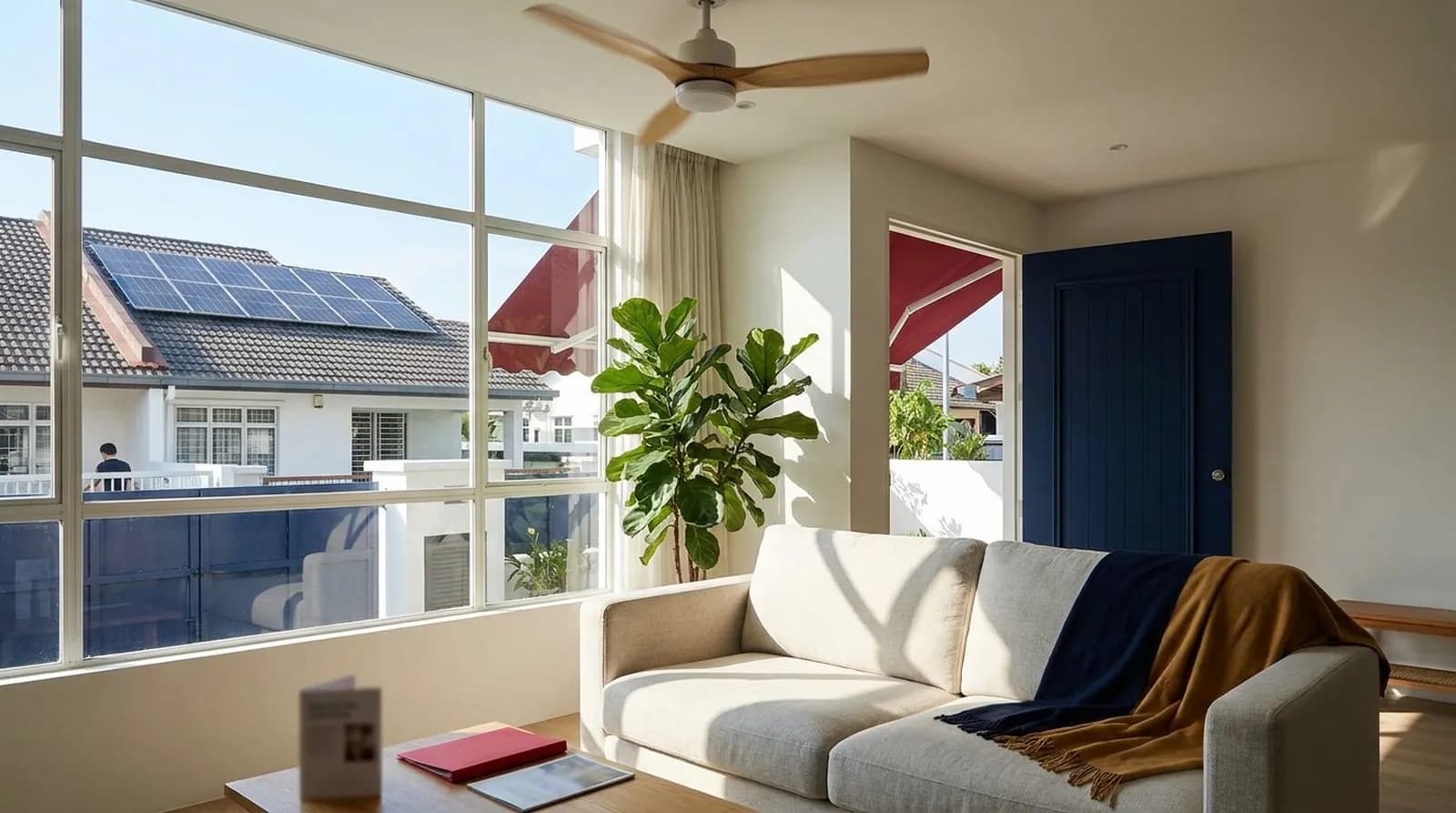
Is it really possible to reduce your electricity bill to RM 0? Not entirely: a typical home can cut its bill by about 70%. You can offset most of your energy charges, but some charges remain.
The Concept of 'Offset'
A solar system generates power during the day (10am - 3pm peak). 1. First, this power runs your house directly (no import cost). 2. Excess power is exported to TNB as credits.
Example: 2-Storey Terrace with a RM 450 Bill
- Average Bill: RM 450 (about 900 kWh a month)
- System: 9.30 kWp (RM 22,999, Solis inverter)
- Monthly Solar Generation: ~977 kWh
- New Bill: about RM 125 (about 70% lower)
Estimate on the RP4 domestic tariff (from 1 Jul 2025), before AFA, the 1.6% RE Fund and service tax; 3.5 sun-hours a day; about 40% of solar used at home and the rest exported and credited at the 27.03 sen Energy Charge (capped at what you import) for 10 years under Solar ATAP. On the same estimate, a RM 200 bill with a 5.58 kWp system falls to about RM 57 (also about 72% lower), and some export credit is forfeited. Your own result depends on your usage and roof.
Why not 100%?
Only about 40% of the solar you generate is used at home; exported energy earns just the Energy Charge, and some export credit is forfeited each month. You also still pay the network and capacity charges on imported energy, the Retail Charge (RM 10 a month, waived for homes using up to 800 kWh until 31 Dec 2026) and the 1.6% KWTBB Fund levy.
ROI Sweet Spot
Under the RP4 tariff there are no tiers: every kWh you no longer buy saves 44.43 sen (54.43 sen above 1,500 kWh a month), and using less from the grid can move you into a higher Energy Efficiency Incentive band. Exported kWh earn only the Energy Charge (27.03 sen), so self-consumption pays best.
Enter your TNB bill amount into our solar savings calculator to see exactly how much you can slash. For a high-bill home looking to maximise offset, the 8kW solar system is a popular choice for larger bills.