Protect critical airflow
Model day/night ventilation separately and retain an appropriate backup strategy for critical livestock loads.
Model your project savings and peak-demand reduction
Calculate ROIStart with the bill and the loads that run while the sun is up. Trexon engineers validate roof capacity, demand profile, night-time resilience and grid constraints before proposing a system.
What we model
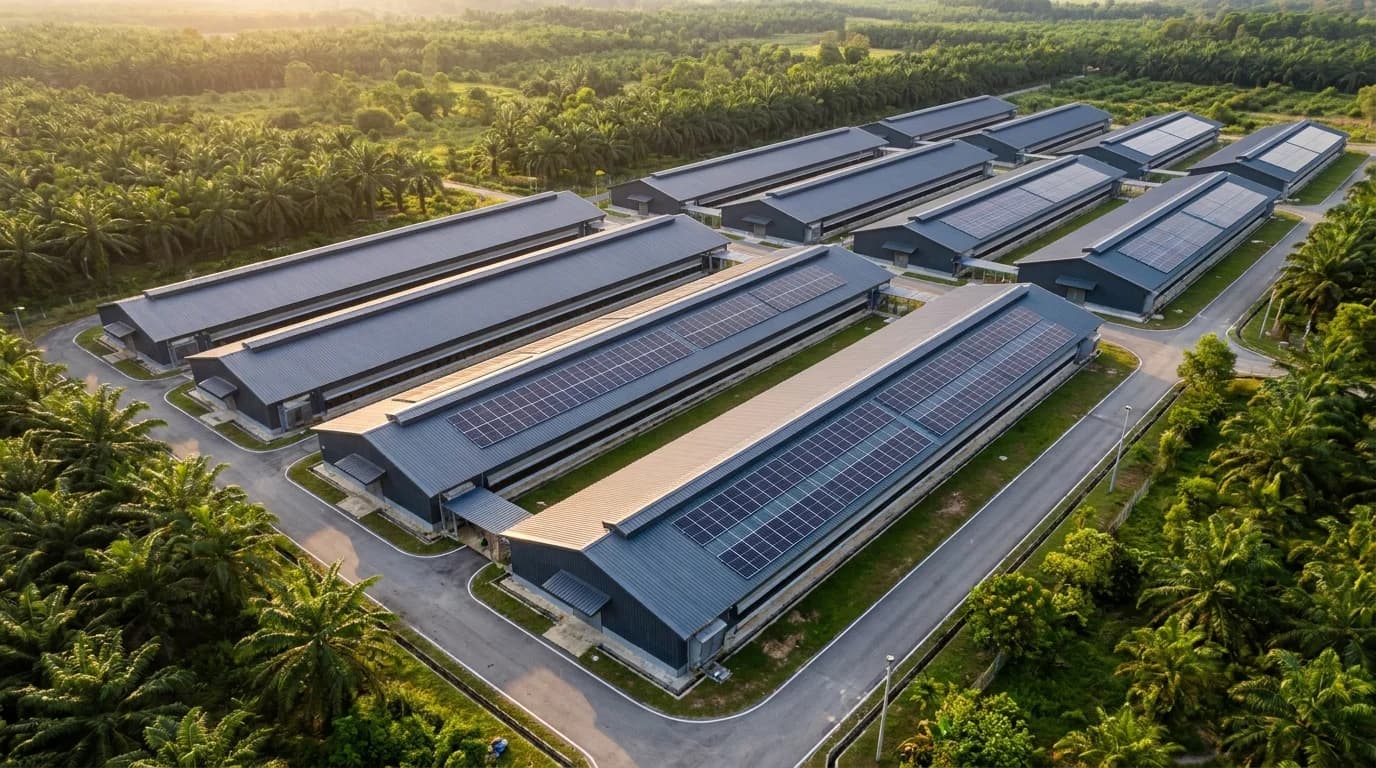
Illustrative solar concept. Site design follows engineering assessment.
Tune the assumptions to your farm’s operating profile.
Estimated bill reduction
RM 5,321 / month
RM 63,857 / year planning estimate
Formula used
100 kWp × 105 kWh/kWp/month × 100% used on site × RM0.5068/kWh = RM 5,321. Illustrative: energy charge only, before SST, no demand-charge saving.
This is an input-led planning estimate, not a proposal, tariff quote or production guarantee. A bill and load profile are required before Trexon confirms savings.
Model day/night ventilation separately and retain an appropriate backup strategy for critical livestock loads.
Size around coincident daytime loads instead of assuming every kWh can be offset.
Share a recent bill, shed layout and load schedule for a technical assessment.
Poultry houses run ventilation fans, cooling pads or foggers, lighting, feed lines and water pumps, and many of those loads are heaviest in the hottest part of the day. That daytime pattern is where rooftop solar can help most, but the birds also need airflow overnight and during outages, so a farm design always separates the loads solar can serve from the ones that need a backup plan. The estimate above is an input-led planning tool, not a quotation.
For a technical assessment, prepare a recent TNB bill (ideally 12 months), a shed layout or roof plan, a list of fans, pumps and feed equipment with their operating hours, and a photo of the meter and main distribution board. If you already run a diesel generator, note how often it starts. Our diesel calculator and the guide to replacing a diesel genset help frame that cost, and commercial battery storage explains how storage can carry critical loads when the grid or the sun is not available.
Compare financing options before you decide how to fund the project, and see our wider agriculture and farm solar page for plantations, livestock and other farm types.
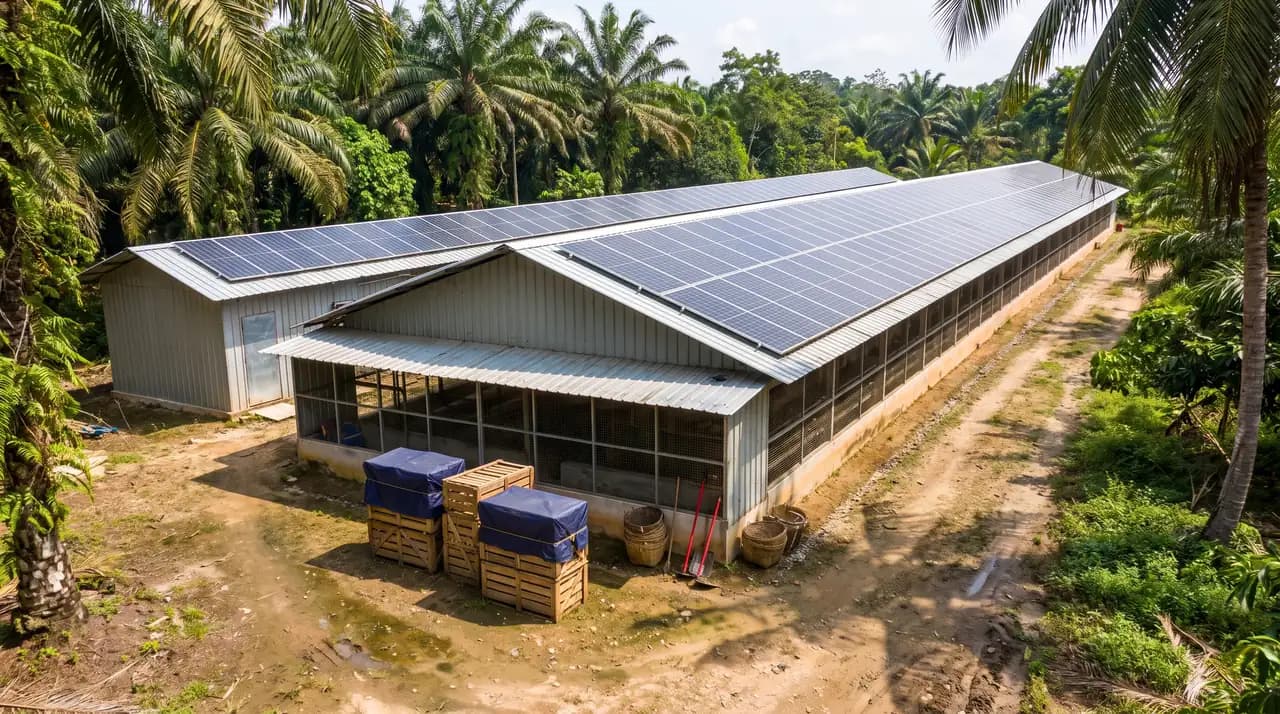
Share your farm’s bill, shed layout and operating hours. Our commercial team will review the daytime load profile before recommending a solar or hybrid design.
Prefer to talk first? Message our commercial team on WhatsApp.
WhatsApp Us