Model your project savings and peak-demand reduction
Calculate ROIIndustrial Park Peak Shaving
MD charge reduction & BESS
Reduce high TNB Maximum Demand charges across Malaysia's major manufacturing hubs. We model peak shaving for factories in Batu Kawan, Senai, Kulim, and Selangor to scope BESS systems, with GITA eligibility subject to MGTC verification.
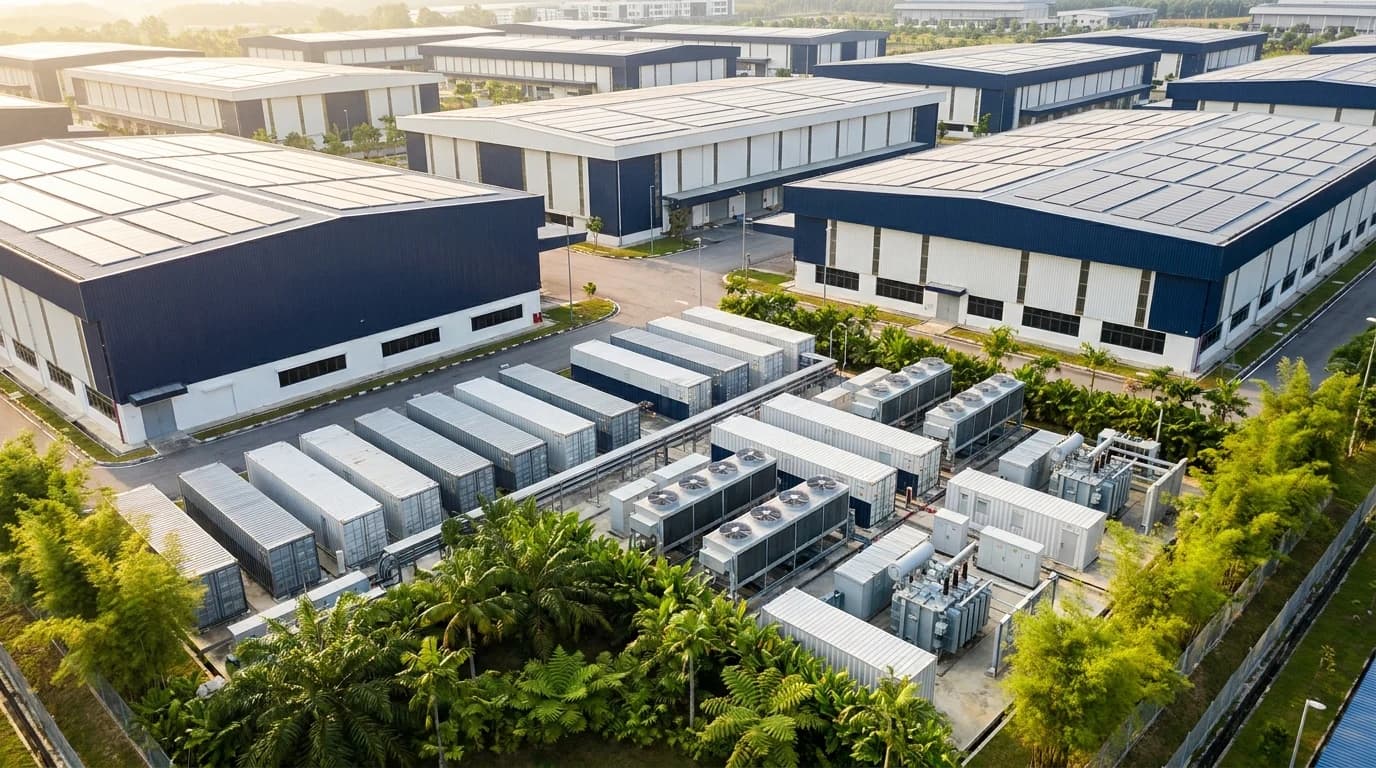
Our Active Mapped Industrial Hubs
Select your factory location below to configure the localized peak shaving simulator.
How Trexon Peak Shaving Defeats Maximum Demand
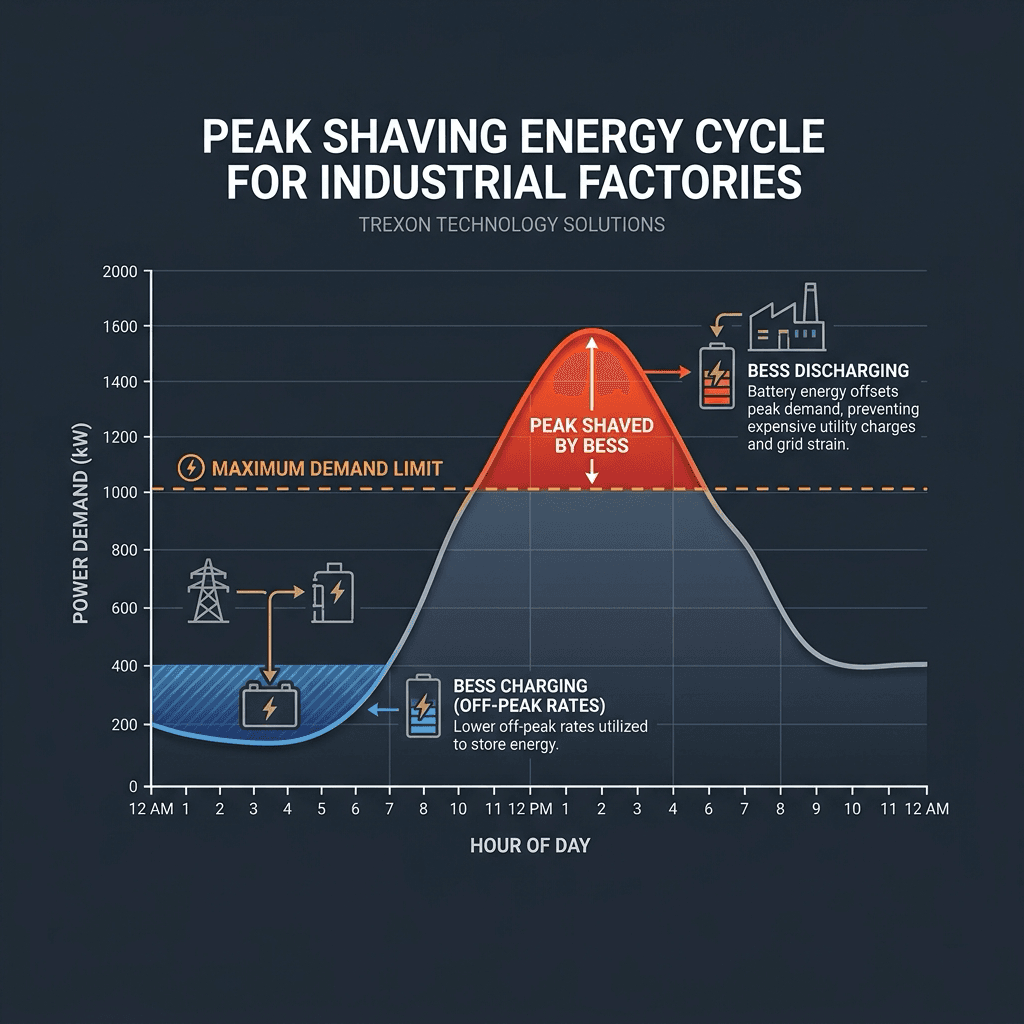
Experience the automated energy cycle. Check the live schematic below to see how a BESS energy management system (EMS) coordinates the BESS battery storage with the TNB grid to clip peak charges.
Off-Peak Recharge (outside 14:00 - 22:00 weekdays)
The battery charges at a highly-discounted off-peak rate (off-peak rate), preparing the reservoir of energy for daily production runs.
Peak Shaving (14:00 - 22:00, Mon–Fri)
During peak tariff windows, the Energy Management System (EMS) releases energy from the battery to lower the highest 30-minute average demand that sets your MD charge.
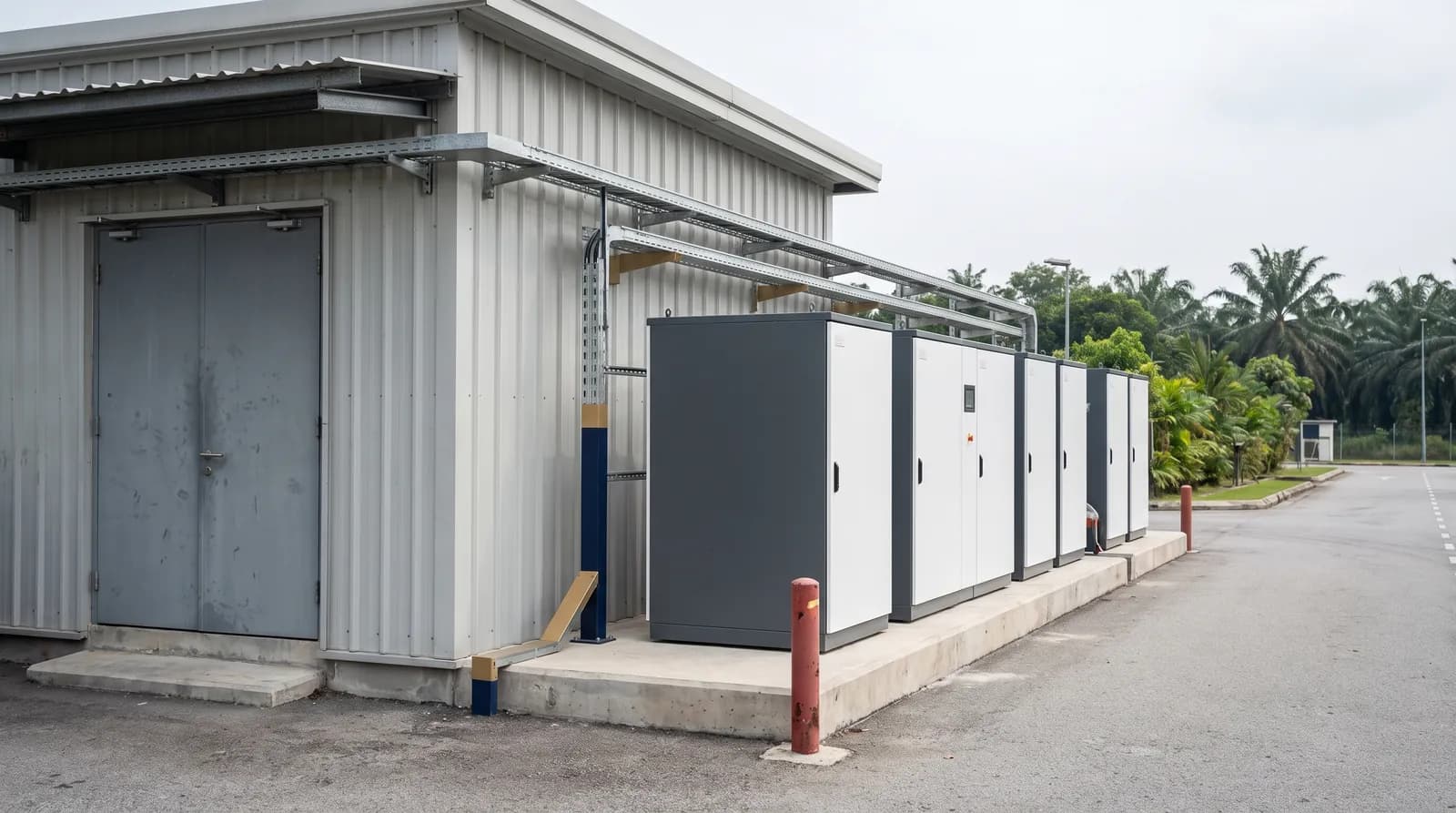
Modular BESS Technical Schematic
Liquid-cooled Lithium-Iron-Phosphate (LFP) containers suit Malaysia's heat profile, typically with integrated thermal run-away safety modules. Specifications are confirmed with the BESS supplier per site.
 Concept illustration
Batu Kawan Industrial Park
Default settings loaded based on local Semiconductors & Medical Technology operations.
Sized specifically for Batu Kawan Industrial Park's typical production shifts.
RM 124,005 saved annually.
*Indicative model only; maximum-demand rate, storage cost and savings are assumptions. Send 12 months of bills for a site-specific model. GITA Asset (subject to MGTC verification): BESS is Tier 1, set off against up to 70% of statutory income; the system must be commissioned and the application submitted to MGTC by 31 December 2026.
Request Custom AuditIllustrative Scenarios Across Mapped Parks
Modelled examples of how solar and BESS can cut energy costs and improve supply resilience for factories in key manufacturing zones — not customer results.
Heavy Chemical Processing
Peak-Shaving ScenarioA solar + BESS hybrid system modelled to shave peak loads and help protect reactor controls from grid sags. Send 12 months of bills for a site-specific model.
Plastic Molding Facility
Maximum-Demand ScenarioRooftop solar on a 40,000 sq ft factory, self-consumed under Solar ATAP. Shifting injection molding startup schedules to battery discharge hours reduces maximum demand charges.
E&E Assembly Line
UPS-Mode Ride-ThroughA 250 kWh modular LFP BESS in backup UPS mode rides through brief grid voltage flickers, protecting sensitive semiconductor pick-and-place equipment.
Plan Your Industrial Park Peak Shaving Project
Peak shaving works best when the battery is sized from your real half-hourly demand profile rather than a park-wide average. Start with your latest 12 months of TNB bills and, if you have it, interval data from your meter. For a deeper look at storage design, read our guide to industrial battery storage, compare the general peak shaving with solar approach, or see how BESS fits alongside rooftop PV. You can also review financing options and the government incentives that may apply to your project.
FAQ: Industrial Park BESS
What is the typical BESS payback period in a high-voltage park like Kulim?
For large factories operating on a TNB High Voltage tariff in Kulim Hi-Tech Park, payback depends on your maximum demand charge, load profile and tariff, so it varies from site to site; send 12 months of TNB bills for a site-specific model. High-voltage installations consume energy at large scale, so maximum demand charges matter. The GITA Asset allowance (60% for solar, Tier 2; 100% for BESS, Tier 1; commissioned and submitted to MGTC by 31 December 2026) can shorten the post-tax payback further.
How does the JS-SEZ priority in Senai affect green incentives?
Senai Airport City factories may benefit from incentives under the Johor-Singapore Special Economic Zone (JS-SEZ) framework, subject to the programme terms. National GITA incentives also apply, subject to MGTC verification.
What is the physical footprint of a 500 kWh battery system?
A standard 250kW / 500kWh BESS system consists of a single IP55-rated container cabinet measuring roughly 2.2 meters in height, 1.8 meters in width, and 1.5 meters in depth. It requires a simple concrete foundation pad next to your substation or primary electrical room, taking up less than 5 square meters of land.
Ready to Reduce Your Energy Costs?
Request a commercial solar assessment. Our commercial team will review the submitted project details during business hours.
- Sizing from your 12 months of TNB bills and shift pattern
- Roof, switchboard and single-line diagram reviewed by our engineers
- Available incentives (GITA for solar, subject to MGTC verification) and Solar ATAP eligibility checked for your premises
- SEDA-registered PV Service Provider (RPVSP-2026/373) · SSM 201301044881 (1074704-D)
Prefer to talk first? Message our commercial team on WhatsApp.
WhatsApp Us