Commercial properties
Offices, hotels, retail sites and mixed-use developments planning shared charging bays.
Model your project savings and peak-demand reduction
Calculate ROICommercial EV infrastructure
Plan charger mix, electrical capacity, load management, payment operation and solar integration as one site project—not as a collection of wallboxes.
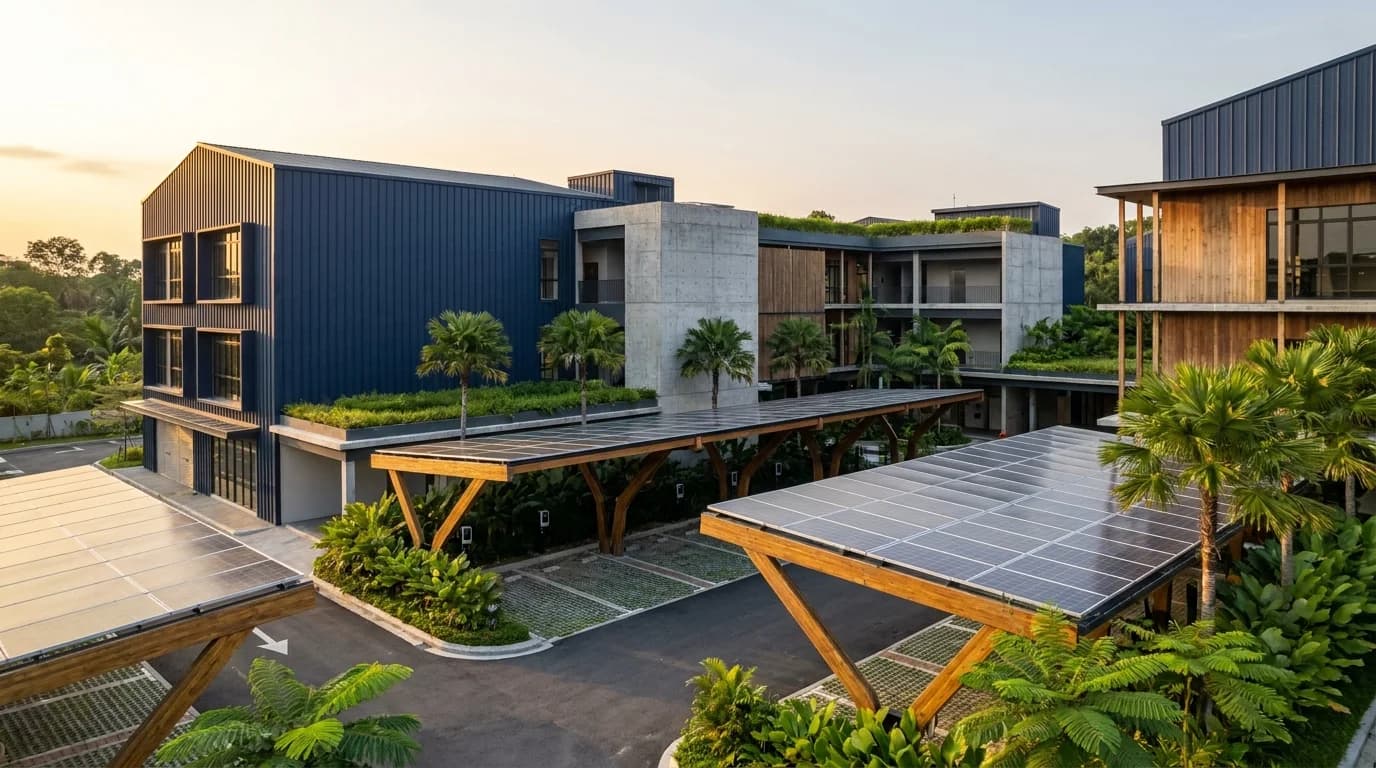
Offices, hotels, retail sites and mixed-use developments planning shared charging bays.
Workplace, logistics and fleet charging designed around operating schedules and site demand.
Destination and public-access charging where uptime, payment flow and operating ownership matter.
Engineering scope
Supply, diversity, maximum demand and staged capacity requirements.
Access, payment, monitoring, uptime ownership and user support.
AC and DC selection based on dwell time, turnover and vehicle profile.
Compare purchase routes: outright, bank loan or hire purchase. Every route starts with a booking of 20% of the system price, capped at RM20,000, credited in full.
Approximate information is enough for the first review. Final equipment and electrical design follow site verification.
The right charger mix depends on how long vehicles stay. Staff and hotel-guest vehicles are parked for hours, so lower-power AC charging spread across many bays usually serves them well, while short-stay public sites and fleet turnarounds may call for DC fast charging. Because every added charger raises the site's maximum demand, load management is planned together with the charger count: it shares the available supply between bays so that the incoming TNB supply is not exceeded at peak.
Where a site already has rooftop or carport solar, daytime charging can use part of that generation, which is why charging, solar and battery storage are best scoped in one assessment. Our commercial solar and commercial BESS pages explain the generation and storage side, and commercial solar financing covers how those projects can be funded.
For a first review we normally ask for the latest 12 months of TNB bills, a site plan showing the parking area, the single-line diagram and a photo of the meter and main switchboard. These show how much spare capacity the incoming supply has and whether a transformer or switchgear upgrade should be budgeted before any charger is ordered. Final equipment selection and electrical design follow a site visit.
Each guide covers the typical charger mix, access and billing questions for that kind of site.
Share the site, expected usage and commercial model. A Trexon commercial team member will review your request and reply.
Prefer to talk first? Message our commercial team on WhatsApp.
WhatsApp Us