Model your project savings and peak-demand reduction
Calculate ROIBackup-Ready Power for
Critical Care
Solar with UPS and battery backup for critical loads. Reduce electricity costs with patient safety built into the design.
Enquire about your project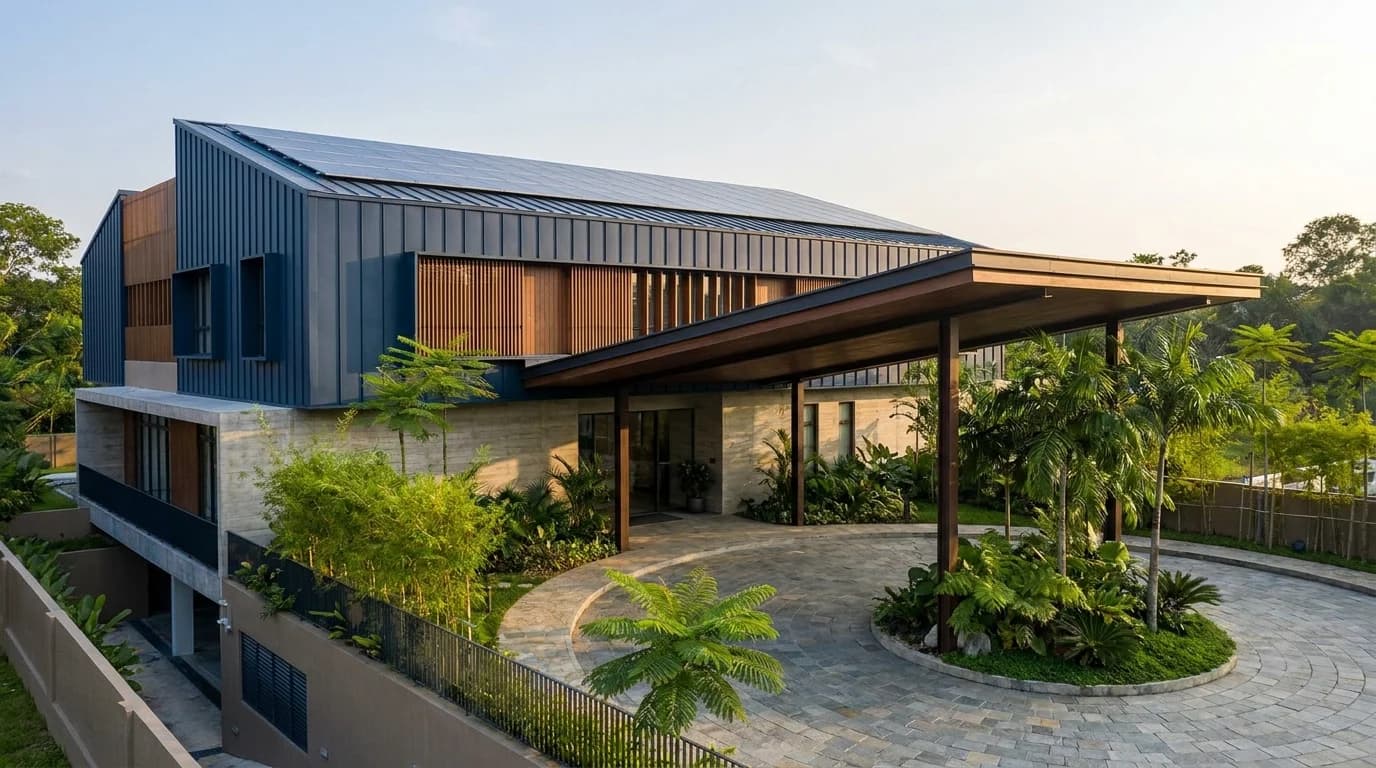
Illustrative solar concept. Site design follows engineering assessment.
Why Medical Facilities Go Solar
Clean daytime energy for patient care and operational excellence.
Critical Infrastructure
✕Grid failures risk life support systems
Solar + UPS/battery backup sized for critical loads
Strict Climate Control
✕Precision cooling is energy intensive
Offset cooling costs significantly
Long-hours Operations
✕High tariff rates during peak hours
Generate power when usage is highest
Backup Power Rules
✕Strict backup power regulations
Hybrid backup for critical loads
Green Healthcare
✕Rising pressure for sustainability
Demonstrate eco-leadership
Operational Costs
✕Energy is a major hospital expense
Directly improve the bottom line
Solar Systems for Medical Facilities
Private Clinic
Specialist Center
Private Hospital
Medical Complex
Medical Facility ROI Analysis
Illustrative scenario: 50 kWp Medical Center (not a Trexon project)
UPS & Battery Integration
Hybrid inverter systems can keep designated critical loads running from the battery during grid outages; backup duration depends on battery kWh and load, and is confirmed in the design.
Solar for Malaysian Healthcare
Leverage local compliance frameworks and tropical advantages
Compliance Support
- DOSH electrical safety: Designed to Malaysian standards
- JCI/MSQH: Documentation to support accreditation audits
Solar ATAP for Healthcare
- Export credits: Surplus daytime solar exported to TNB earns bill credit
- SEDA documentation handled: Trexon prepares the Solar ATAP paperwork
Related Solar Solutions
Explore solar options for other facility types
Frequently Asked Questions
Common questions from hospital and medical facility owners about solar energy
How does solar+battery ensure hospital-grade power reliability for critical medical equipment?
A hybrid inverter system can supply critical loads from three sources: solar PV generation, battery storage and the grid. When the grid fails it switches automatically to battery power; switchover time depends on the equipment chosen and is confirmed in the design, so it does not replace the UPS units that protect individual medical devices. Critical loads such as ICU equipment, operating theater lighting and life support machines can be placed on a dedicated sub-panel backed by the battery; backup duration depends on battery kWh and load. Backup design is agreed with your biomedical engineering team and reviewed against your facility's applicable requirements.
How does solar integrate with existing medical equipment UPS systems?
Solar hybrid systems complement (not replace) existing medical UPS infrastructure. Your current UPS units continue protecting individual devices such as ventilators and infusion pumps. The solar+battery system operates at the facility level — reducing the frequency and duration of UPS discharge events, and reducing UPS maintenance costs. Integration requires a meeting with your biomedical engineering team to map critical load circuits, ensure EMI shielding for sensitive imaging equipment, and verify that inverter harmonics meet IEC 61000 standards applicable to medical facilities.
Should a hospital or clinic conduct an energy audit before going solar?
A clinical energy audit is strongly recommended and often reveals significant savings opportunities beyond solar. Medical facilities typically have energy-intensive equipment running at sub-optimal settings — HVAC zones overcooling unoccupied areas, aging medical refrigerators that may use more energy than modern units, and lighting fixtures with poor lumen-per-watt ratios. Our RM500 commercial site survey includes a TNB bill review and facility walkthrough, then provides a priority action list; the full fee is credited when you proceed. Solar and efficiency upgrades together give the largest saving; the split depends on your facility and is set out in your proposal.
Is the GITA (Green Investment Tax Allowance) available for healthcare solar installations?
Yes — healthcare companies that pay Malaysian corporate tax can claim it. Private hospitals, specialist centers, and clinics that install solar PV systems can claim a 60% Green Investment Tax Allowance (GITA Asset, Tier 2) on qualifying capital expenditure. The allowance can be set off against up to 70% of statutory income each year. For a 50 kWp clinic installation at RM 120,000 (before SST), the RM 72,000 allowance is worth up to RM 17,280 in tax at 24%, bringing the effective cost to about RM 102,700. GITA applications require MyHIJAU-listed equipment and are submitted to MGTC (MyHIJAU) after commissioning, and must be commissioned and submitted by 31 December 2026 — we prepare the documentation and support your application to MGTC.
Can a 24-hour clinic or emergency department benefit from solar despite operating around the clock?
24-hour medical facilities are good solar candidates because their daytime loads use most of the solar output on site. The saving is modelled from your own TNB bill: solar used on site is valued at your tariff's energy rate. Under Solar ATAP, surplus export is credited at the monthly Average SMP and forfeited if unused at the end of each billing period. Adding a battery (30–60 kWh) extends savings into evening hours (6pm–midnight), which are the second-busiest period for many emergency and urgent care facilities.
Get a Custom Solar Proposal for Your Medical Facility
Tell us about your business and we'll design a solar system that matches your energy needs and budget.
- Sizing from your 12 months of TNB bills and shift pattern
- Roof, switchboard and single-line diagram reviewed by our engineers
- Available incentives (GITA for solar, subject to MGTC verification) and Solar ATAP eligibility checked for your premises
- SEDA-registered PV Service Provider (RPVSP-2026/373) · SSM 201301044881 (1074704-D)
Prefer to talk first? Message our commercial team on WhatsApp.
WhatsApp Us