Skip to main content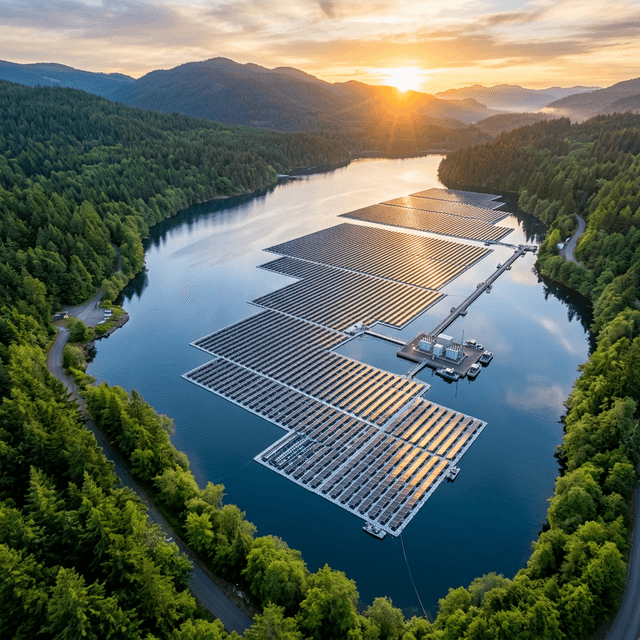
Transform Your Water Bodies
Model your project savings and peak-demand reduction
Calculate ROIUtility-scale Aquavoltaics
Transform Your Water Bodies
Into Power Assets
Floating Solar PV (FPV) for lakes, reservoirs, and dams. Increase energy yield through natural cooling while reducing water evaporation by up to 30%.
SEDA Documentation Support
TNB Application Support
References On Request
+15%
Higher Efficiency vs Ground
-30%
Water Evaporation
0m²
Land Acquired
The Advantages of Floating Solar
Malaysia's tropical climate and abundant reservoirs make FPV a highly strategic solution for land-constrained corporations and IPPs.
Zero Land Usage
Preserve valuable real estate and eliminate the need for costly land acquisition, clearing, and earthworks.
Higher Energy Yield
The cooling effect of water below the panels naturally limits thermal losses, boosting generation efficiency by up to 15%.
Water Conservation
The panels shade the water body, significantly reducing evaporation rates—crucial for dams and municipal water catchments.
Advanced Anchoring
Engineered mooring and anchoring systems designed to withstand monsoon winds and varying water levels.
Algae Reduction
By blocking excess sunlight from penetrating the water, FPV mitigates harmful algae blooms, improving water quality.
Hydro Integrations
Pairing FPV with existing hydroelectric dams utilizes existing transmission infrastructure and balances peak generation.
Ideal Applications for FPV
Industrial Retention Ponds
Factories with large cooling/retention ponds can offset massive internal loads without sacrificing factory expansion space.
Water Treatment Plants
Municipal and private water operators can utilize catchment reservoirs to power their highly energy-intensive pumping stations.
Utility Scale (LSS/CGPP)
Independent Power Producers developing gigawatt-scale projects on dormant lakes or in synergy with hydro assets.
FPV-Grade Equipment
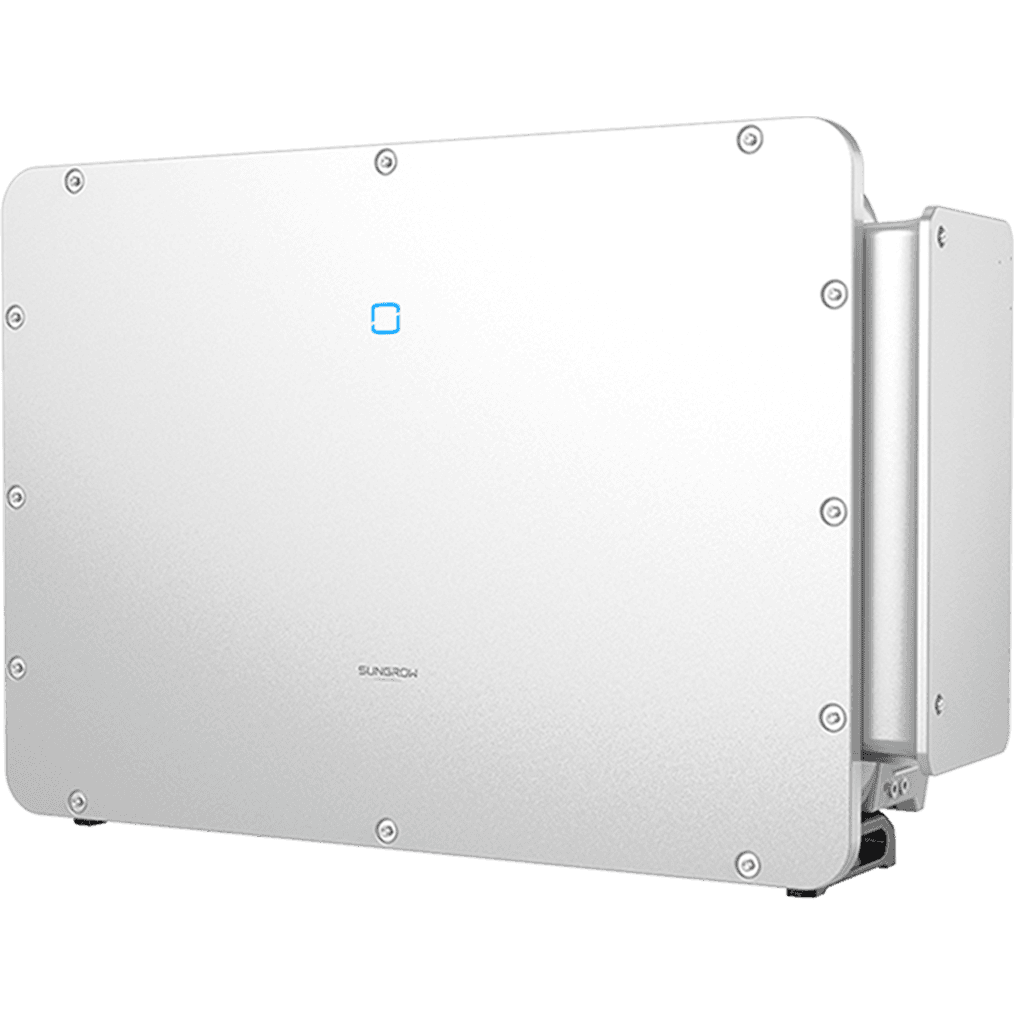
IP68-rated inverters designed for high-humidity, marine environments — essential for reliable floating solar operation.
Sungrow SG110CX
IP65 Commercial Inverter
The FPV Engineering Challenge
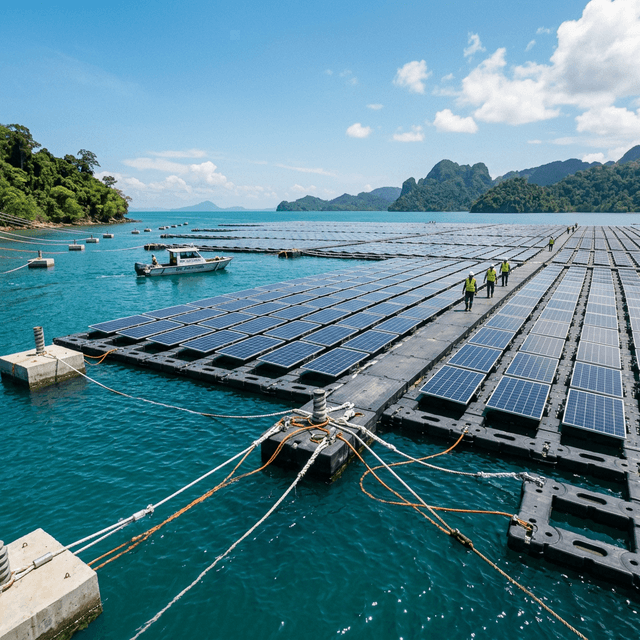
Floating solar requires completely different engineering paradigms compared to standard ground-mounted or rooftop PV. At Trexon, our specialized FPV engineers focus on the crucial structural mechanics:
- 1Bathymetric Surveys: Mapping the underwater topography to design the optimal anchoring arrangement.
- 2Mooring & Anchoring: Elastic mooring lines and deadweight/helical anchors designed to handle wave action and wind loads.
- 3Floater Technology: Utilization of HDPE pontoons that are UV resistant and safe for aquatic ecosystems.
Frequently Asked Questions
Technical insights on floating solar deployments
Is floating solar more expensive than ground-mounted?
Initially, the CAPEX for FPV is slightly higher (around 10-15%) due to the specialized floats and complex mooring systems. However, this is heavily offset by the zero land acquisition costs and the higher energy yield (up to 15% more generation due to water cooling), making the long-term LCOE highly competitive.
Are the solar panels safe mounted over water?
Yes. We utilize double-glass, high-durability modules with elevated waterproof ratings, paired with IP68 string inverters. All DC cabling is safely routed above the water level using specialized cable trays integrated into the floaters, ensuring complete electrical safety.
Does FPV harm aquatic life?
Studies show FPV generally has a neutral or beneficial impact on reservoir ecosystems. By blocking excess sunlight, it limits rapid algae bloom growth while the food-grade HDPE floaters do not leach chemicals into the water.
Commercial Solar
Develop Your Floating Solar Asset
Engage our aquatic engineers for bathymetric surveys and FPV feasibility studies.
- Custom system design for your business
- ROI analysis based on your electricity usage
- Flexible financing: PPA, IPP, bank loans
- Solar ATAP, TNB and ST documentation support