Build your solar plan — no payment until you approve
Configure solarYour Roof ShapeDetermines Your Solar ROI
L-shaped, U-shaped, semi-D, corner lots — complex Malaysian roofs need a smarter solar layout strategy. Here’s the complete 2026 guide with diagrams, pricing, and the inverter decision that makes or breaks your system.
Malaysian House Types & Solar Compatibility
Not all Malaysian homes are created equal when it comes to solar. Roof geometry, orientation, and total usable area determine your maximum system capacity — and your return on investment.
Single-Storey Terrace
Low complexityString OKSimple pitched roof, usually single south or west face. Easiest layout. String inverter ideal.
Double-Storey Terrace
Low complexityString or MicroRidge-split roof means two orientations. Dual-MPPT string inverter works well if both faces are used.
Semi-Detached (Semi-D)
Medium complexityString or MicroWider lot gives more south-facing area. Ridge split creates two orientations. Higher budget allows micro inverter upgrade.
Corner Lot Terrace
High complexityMicro often suggested (not stocked)Wrap-around roof shape often creates 3 distinct orientations. Micro inverters are often suggested for maximum yield (not stocked by Trexon).
L-Shaped Bungalow
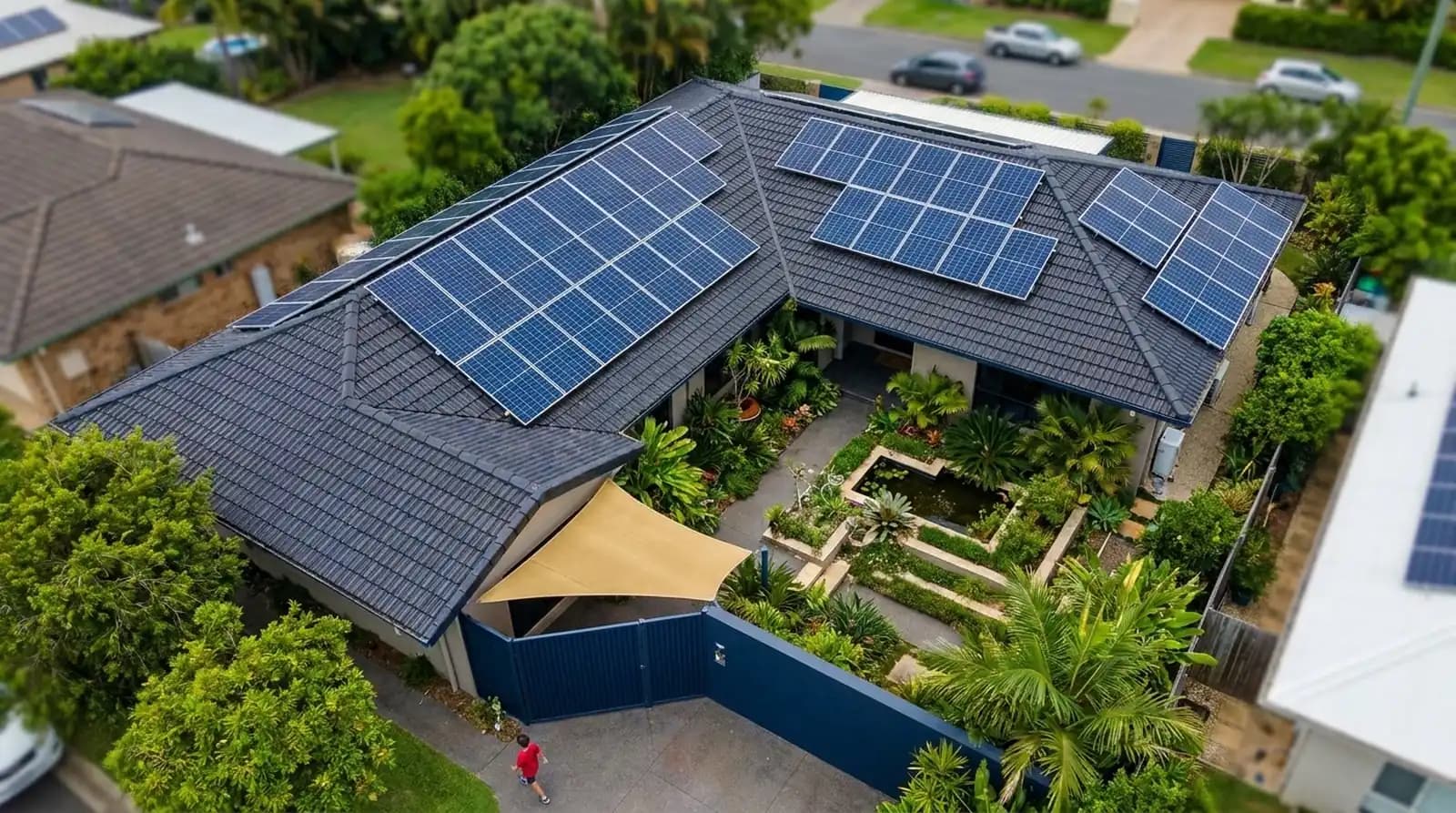
Very High complexityMicro often suggested (not stocked)Two roof wings at 90° angle create 3-4 orientations. Complex internal valleys. Micro inverters are often suggested for the best yield (not stocked by Trexon; quoted on request).
U-Shaped Bungalow
Very High complexityMicro often suggested (not stocked)Three roof wings with inner courtyard create maximum orientation complexity. Often 4-5 roof faces. Micro inverters can recover some energy lost to mismatch on multi-orientation roofs.
The Multi-Orientation Challenge
This is the single biggest mistake homeowners with complex roofs make: installing a string inverter across panels on different roof faces. Here’s why it destroys your system performance.
What Is MPPT Mismatch?
MPPT (Maximum Power Point Tracking) is the algorithm your inverter uses to extract maximum power from your panels. A string inverter has 1-2 MPPT inputs. If you connect panels facing South and East to the same MPPT, the inverter can only optimise for one sun angle at a time — the other panels are permanently throttled.
L-Shaped Roof — String Inverter Problem
12 panels
Peak: 12pm-3pm
6 panels
Peak: 8am-11am
Orientation Mismatch Energy Loss
The Rule: 3+ Roof Faces Usually Need Micro Inverters or Multiple MPPTs (two faces can use a dual-MPPT string inverter)
If your solar layout spans three or more roof faces with different compass orientations, micro inverters are often suggested (Trexon does not stock them; we assess each roof on site). A single string inverter can lose a share of your system’s potential on mismatched orientations. For the full inverter comparison, see our String vs Micro Inverter Guide.
Optimal Panel Placement by House Type
For each house type, we map out priority zones (best ROI), secondary zones (use if you need more kW), and avoid zones. These are bird’s-eye diagrams of typical Malaysian roofs viewed from above.
Single-Storey Terrace
20×65ft • 5.58-7.44 kWp
Double-Storey Terrace
20×65ft • 6.20-8.06 kWp
Semi-Detached (Semi-D)
22×75ft • 8.06-9.92 kWp
Priority
L-Shaped Bungalow
40×80ft+ • 9.92-17.98 kWp
Priority
Wing
2nd
U-Shaped Bungalow (Most Complex)
50×90ft+ • 14.88-19.84 kWp
Left
Priority
Right
Priority
North-Facing
Avoid
String vs Micro Inverter for Complex Roofs
The inverter decision is more important than the panel brand for complex roof homes. Here’s the decision matrix specific to Malaysian roof geometry.
Single Roof Face
String OKAll panels face the same direction (south-only installation on a simple gable roof). String inverter is fine — 20-30% cost saving with near-identical performance. Use Sungrow or Huawei.
Two Roof Faces (Ridge Split)
Dual-MPPT or MicroPanels on both sides of a ridge (e.g., South + North, or East + West). Use a dual-MPPT string inverter with separate string for each face, OR micro inverters. Dual-MPPT string is cost-effective if both faces have similar panel counts.
Three or More Roof Faces
Micro often suggested (not stocked)L-shaped, U-shaped, or hip roofs with 3+ distinct orientations. Micro inverters are often suggested. A string inverter with fewer MPPT inputs than roof orientations can lose a high share of energy on the mismatched faces. Trexon's catalogue uses string inverters; micro inverters are not stocked and are quoted on request, so we assess each roof on site.
Cost Difference Analysis
Micro inverters cost roughly RM 5,000-12,000 more for a typical Malaysian residential system (market estimate, not a Trexon quote). On a complex roof, they can recover some energy lost to mismatch on multi-orientation roofs; whether the premium pays back depends on your roof and tariff.
Illustrative Layout Scenarios — Not Trexon Projects
Three illustrative scenarios for typical Malaysian homes with complex roof geometries. Output and savings are estimates, not measured data.
Illustrative scenario: 22×75ft semi-D (not a Trexon project)
West-facing panels produce 15% less than south but still contribute meaningfully. Micro inverter ensured no mismatch between the two orientations. String inverter would have lost ~1,400 kWh/year.
Malaysia 2026 Pricing by House Type
Trexon catalogue prices for Solis string-inverter packages, including installation and the Solar ATAP application (Huawei +RM3,000; Sungrow +RM5,000). Micro inverters are quoted separately. Savings and payback are our RP4 estimates for each package size, and your own bill will change them (3.5 sun-hours a day, about 40% used at home, export credited at the Energy Charge).
| House Type | Recommended Size | Price Range | Monthly Savings | Payback Period | Inverter |
|---|---|---|---|---|---|
| Single-Storey Terrace | 5.58-7.44 kWp | RM 15,999 - 17,999 | RM 140-230/mo | 6.5 - 9.5 yrs | String |
| Double-Storey Terrace | 6.20-8.06 kWp | RM 16,999 - 21,499 | RM 180-280/mo | 6.4 - 7.9 yrs | Solis |
| Semi-Detached (Semi-D) | 8.06-9.92 kWp | RM 21,499 - 23,999 | RM 280-370/mo | 5.4 - 6.4 yrs | Solis |
| Corner Lot Terrace | 8.06-12.40 kWp | RM 21,499 - 26,999 | RM 280-470/mo | 4.8 - 6.4 yrs | Solis |
| L-Shaped Bungalow | 9.92-17.98 kWp | RM 23,999 - 33,499 | RM 370-870/mo | 3.2 - 5.4 yrs | Solis |
| U-Shaped Bungalow | 14.88-19.84 kWp | RM 29,499 - 35,499 | RM 720-960/mo | 3.1 - 3.4 yrs | Solis |
Every route starts with the RM2,000 booking; you can then pay outright, by card with a 0% instalment plan of up to 24 months, with a loan from your own bank, or through OKAPI rent-to-own. See our Financing Guide for bank-backed solar loans.
Frequently Asked Questions
Related Guides
Not Sure How to Layout Your Roof?
Our solar engineers will design the optimal panel layout for your specific roof shape using professional shading analysis software. Free quote, no obligation.
SEDA-registered installer • Serving Klang Valley, Selangor, KL, Penang & Johor