Model your project savings and peak-demand reduction
Calculate ROIEnergy Audit Malaysia 2026: How Much Can Your Building Really Save?
A professional energy audit is a strong first step for factories, offices, and commercial buildings to cut electricity costs; savings depend on the site. Learn ASHRAE levels, GITA incentives, and how to find a certified MAESCO auditor.
GITA deadline: 31 Dec 2026
What Is an Energy Audit?
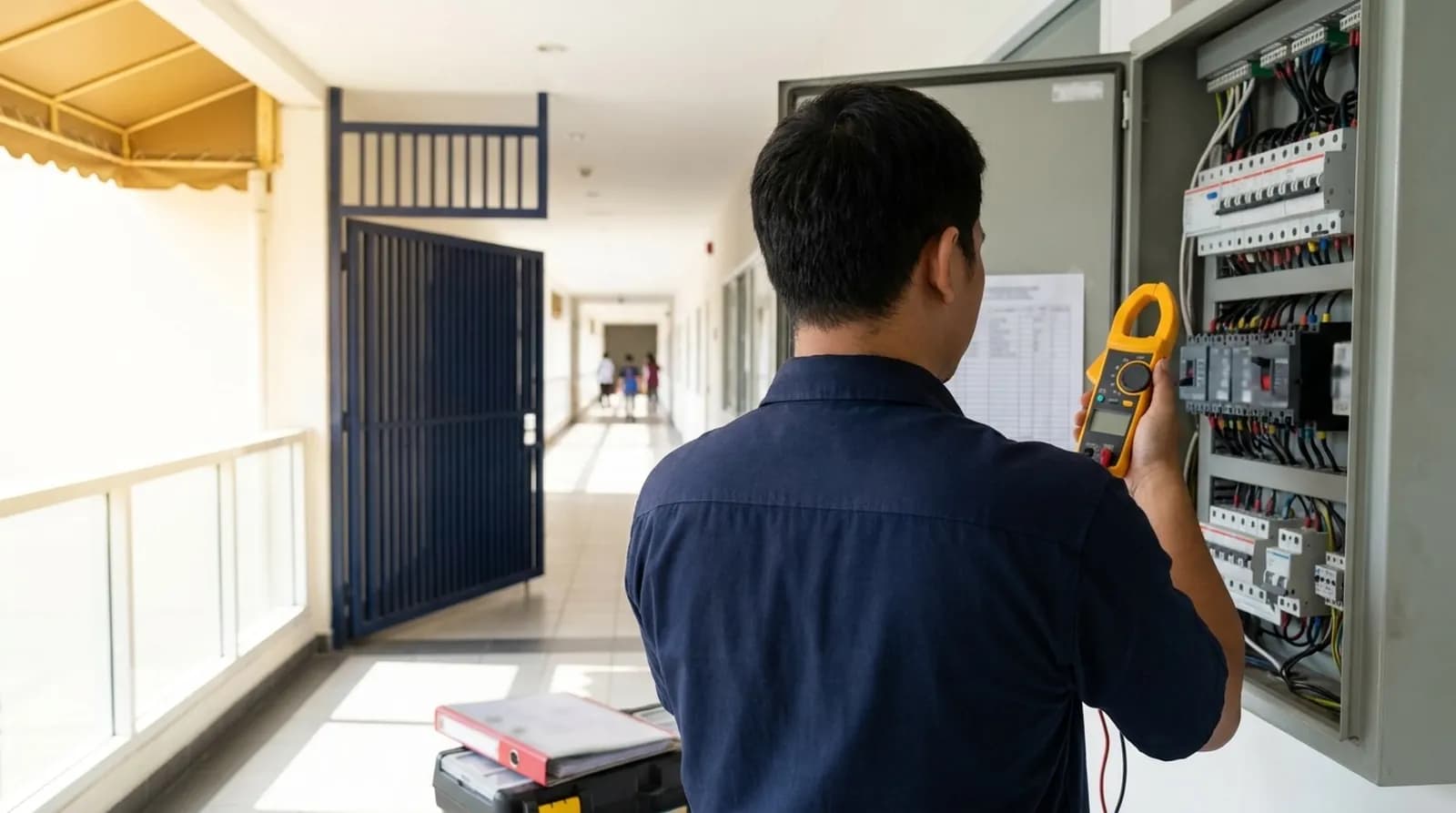
An energy audit is a systematic examination of how energy is consumed in a building or facility. A certified auditor analyses your utility bills, inspects equipment, measures energy flows, and identifies opportunities to reduce waste — with hard numbers attached to each recommendation.
ASHRAE Audit Levels Explained
The internationally recognised ASHRAE standard defines three audit levels. A Level 2 audit report can support an MGTC/GITA application; check MGTC's current documentary requirements.
| Level | Name | Typical Cost |
|---|---|---|
| 1 | Walk-Through Survey | RM 2,000 – RM 5,000 |
| 2 | Energy Survey & Analysis | RM 15,000 – RM 50,000 |
| 3 | Detailed / Computer Simulation | RM 50,000 – RM 150,000 |
Why Malaysian Buildings Waste So Much Energy
Malaysia's tropical climate, combined with aging infrastructure and a lack of sub-metering, creates the perfect storm for energy waste. Most commercial buildings are leaking money through four major channels.
Oversized & Poorly Tuned HVAC
Often the largest share of the billSystems designed for worst-case load run at full capacity even when occupancy is 40%. No VFD, no demand control ventilation, no setback scheduling. HVAC is typically the largest share of commercial energy use in Malaysian buildings.
Aging Lighting Infrastructure
Lighting share varies by siteT8 fluorescent and metal halide fixtures still common in Malaysian factories built pre-2010. LED retrofit cuts lighting energy substantially, often without structural changes.
No Sub-Metering or Real-Time Visibility
Hidden waste varies by siteWithout sub-meters, energy managers cannot identify which production lines, floors, or equipment types are driving costs. Buildings without metering often waste more than metered peers.
Maximum Demand Charge Mismanagement
MD share varies by siteTNB charges RM 89.27/kW for peak demand. A factory peaking at 600kW pays RM 53,562/month in MD charge alone — even if that peak lasts only 30 minutes. Load staggering and demand controllers eliminate this waste.
Maximum Demand: The Hidden Cost Nobody Talks About
Under TNB's MD tariff, even a 30-minute demand spike sets your MD charge for the entire month. A 600kW factory peak costs RM 53,562 in MD charges alone — every single month. Load staggering and demand control systems can reduce the MD portion of an industrial bill without new equipment; the saving depends on the site.
Learn how to reduce your MD chargeAudit Level & Fee Estimator
Enter your monthly electricity bill and building type to see which audit level typically applies and its indicative fee range.
Indicative fee ranges only. Savings and payback depend on your site and are not estimated here. Contact us for a scoped audit quote.
GITA Tax Incentive for Energy Efficiency Equipment
The Green Investment Tax Allowance (GITA) is one of Malaysia's most valuable — and underutilised — tax incentives. Companies investing in qualifying energy efficiency assets can claim 60% of capital expenditure as tax allowance, set off against up to 70% of statutory income.
60% Investment Tax Allowance on qualifying energy efficiency capital expenditure
Offset up to 70% of statutory income — significant cash tax savings for profitable manufacturers
Qualifying assets: chillers, VFDs, LED lighting, BMS, solar PV systems, heat recovery units
Set off against up to 70% of statutory income each year; any unused allowance carries forward until fully absorbed
Available to Malaysian-resident companies — Sdn Bhd and Bhd. Not available to sole proprietors.
A professional audit report strengthens the supporting documents for your MGTC application
How to Apply via MGTC
GITA Asset applications are submitted to the Malaysian Green Technology and Climate Change Corporation (MGTC) through MyHIJAU, after the equipment is installed and commissioned. You will need: the audit report, equipment specifications and purchase invoices, confirmation that the equipment is listed on MyHIJAU, and company tax registration documents.
Important: the equipment must be commissioned and the GITA application submitted to MGTC by 31 December 2026. Subject to MGTC verification.
GITA Example Calculation
How to Choose a MAESCO Auditor
MAESCO (Malaysian Association of Energy Service Companies) maintains a register of certified energy auditors in Malaysia. Not all auditors offer the same quality — here is what to verify before engaging.
Verification Checklist
- 1Verify auditor's MAESCO registration number on maesco.org.my member directory
- 2Request CV showing minimum 5 years of energy auditing experience in your sector (industrial/commercial)
- 3Ask for 3 reference projects with before/after utility data from the past 2 years
- 4Confirm the audit scope matches ASHRAE Level 2 minimum (sub-metering, thermal imaging, load profiling)
- 5Ensure deliverable includes an Energy Conservation Opportunities (ECO) register with IRR/NPV for each measure
- 6Check that the audit report and invoices support an MGTC application if you plan to apply for GITA
- 7Clarify who retains ownership of metering data and whether it can be used for future monitoring
Red Flags to Avoid
- Quote delivered within 15 minutes without site visit — this is a template, not a scoped audit
- No mention of sub-metering or data logging in the methodology
- Single auditor proposing Level 3 simulation for a building under 50,000 sqft
- Audit fee quoted as a percentage of projected savings — creates conflict of interest
- No professional indemnity insurance coverage disclosed
- Report template not aligned with MS1525:2019 (Malaysian code of practice on energy efficiency in non-residential buildings)
Trexon's Integrated Solar + Energy Efficiency Approach
Efficiency measures cut how much electricity you use; solar cuts how much you buy from TNB. Doing efficiency first lets you size a smaller solar system. Savings depend on your load and tariff, so we model them from your own bills.
RM500 Commercial Site Survey
We review 12 months of TNB bills, identify the peak-demand profile, and assess roof/solar viability in one visit. The RM500 is fully credited to your project when you proceed.
ASHRAE Level 2 Audit
A MAESCO-certified energy auditor of your choice conducts a full Level 2 audit with sub-metering, thermal imaging, and load profiling.
Combined Solar + EE Proposal
We model the combined impact of solar generation + efficiency retrofits on your TNB bill, showing estimated payback and GITA value.
Solar Implementation
Trexon delivers the solar installation as a single contractor with one point of contact. Efficiency retrofits are scoped separately; ask us what is in scope.
Frequently Asked Questions
Ready to Find Out What Your Building Is Wasting?
Get a free quote from a Trexon specialist. We will review your TNB bills remotely, estimate your savings potential, and outline the right audit scope for your facility.