Build your solar plan — no payment until you approve
Configure solarPower Your EV With
Solar Energy
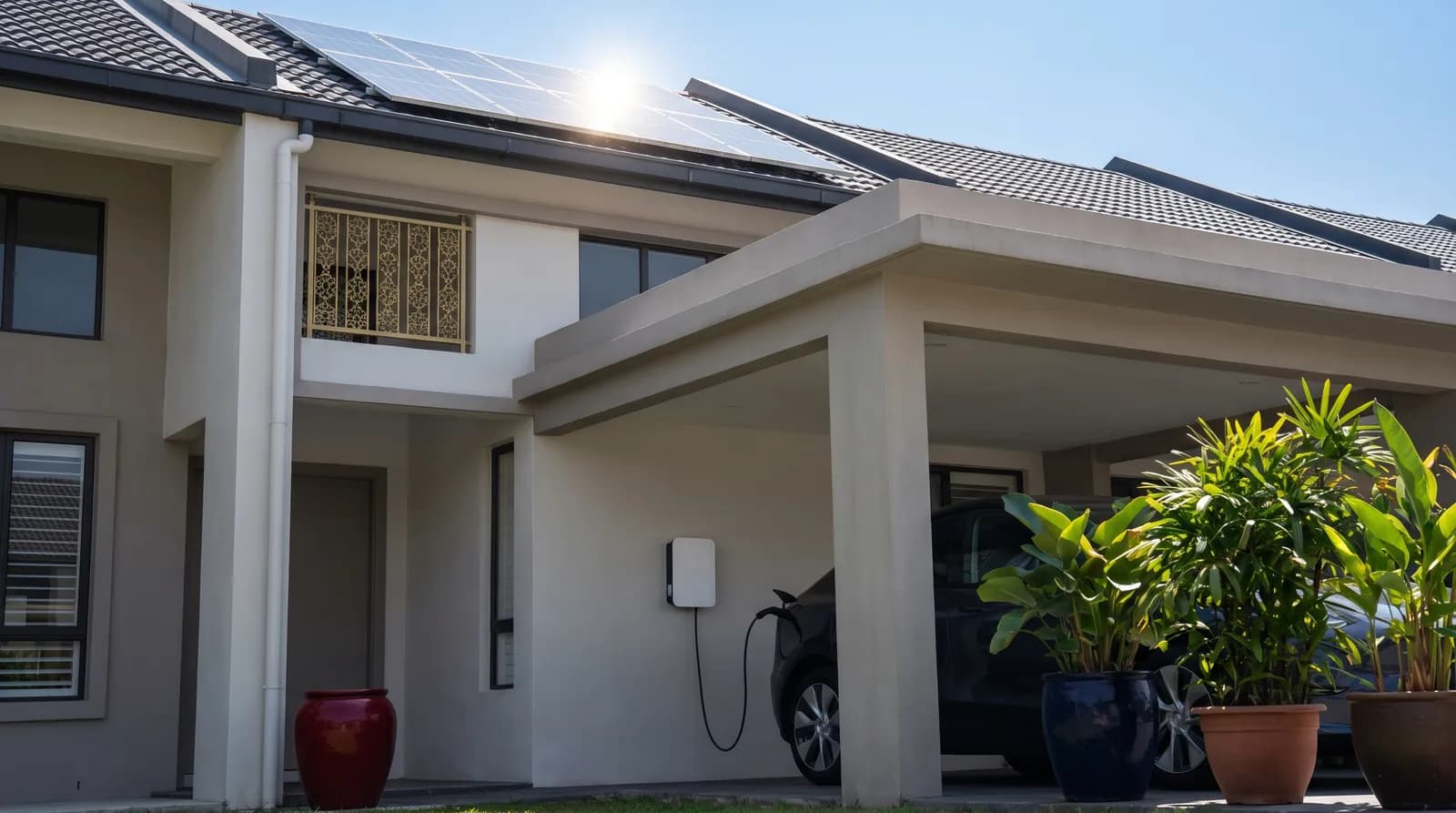
Stop paying for petrol and electricity separately. Combine solar panels with an EV charger and cut your electricity bill while charging from your own roof.
Why Combine Solar with EV Charging?
Your car and your home share the same roof. Use solar to reduce the cost of both.
Fuel from the Sun
Once your solar system is installed, charging from surplus solar costs about RM0.27/kWh, the 27.03 sen export credit you forgo, instead of 44.43 sen from the grid.
Extra Benefit on Top of Solar
On our catalogue basis, residential solar pays back in about 3–10 years from electricity savings alone (larger sizes pay back faster). Charging your EV from surplus solar is an extra benefit that we do not include in those payback figures.
Future-Proof Your Home
Planning solar and a charger together lets one installer design both, with the wiring and load checked once.
Cost Per Kilometre Comparison
Charging from the grid at night uses the domestic Energy Charge of 27.03 sen/kWh (before capacity/network charges and AFA).
How Solar EV Charging Works
Three things happen automatically every sunny day.
Solar Panels Generate
Your rooftop panels convert sunlight into DC electricity from sunrise to sunset — about 3.5 peak sun hours per day in Peninsular Malaysia.
Excess Charges Your EV
After powering your home appliances, surplus solar energy is directed to your EV charger. Your car battery fills up on sunshine instead of grid electricity.
Drive on Sunshine
Kilometres charged from surplus solar cost about RM0.27/kWh in forgone export credit, well below the grid rate. Combined with your lower electricity bill, your monthly outgoings go down.
Home vs Commercial EV Charging
Whether you are charging one car at home or a fleet at your premises, we have a solar-integrated solution.
Home EV Charger
- Schneider Charge Pro AC charger (Type 2)
- Ideal for overnight or daytime solar charging
- RM2,000 booking for a home EV charger
Commercial EV Charger
- AC or DC fast charging, sized to your site
- Multiple bays — fleet & public use
- Access control, billing and network management quoted per site
- Booking is 20% of the system price, capped at RM20,000
How Much Solar Do You Need for EV Charging?
Add this extra solar capacity on top of what you need to cover your household electricity.
| Daily Driving | EV Energy Needed | Extra Solar Needed |
|---|---|---|
| 20 km/day | 4 kWh | 1.1 kWp |
| 40 km/day | 8 kWh | 2.3 kWp |
| 60 km/day | 12 kWh | 3.4 kWp |
| 100 km/day | 20 kWh | 5.7 kWp |
* Based on an average EV efficiency of 200Wh/km and about 3.5 peak sun hours/day in Peninsular Malaysia, with all EV energy supplied by solar. Your home electricity needs are sized separately from your TNB bill.
Catalogue sizes run from 5.58 to 19.84 kWp. Our consultants will size your system based on your actual TNB bill and driving habits.
Frequently Asked Questions
Everything you need to know about solar EV charging in Malaysia.
Can I charge my EV from solar at night?
Not directly — solar panels only generate electricity during daylight. To charge your EV from solar energy at night you need a battery storage system. The battery stores surplus solar energy during the day and releases it at night for your EV charger. Without a battery, nighttime charging draws from the TNB grid at the domestic Energy Charge of 27.03 sen/kWh (before capacity/network charges and AFA).
How much solar do I need to cover EV charging?
An average Malaysian driver covering 40km/day needs roughly 8–10kWh of EV charging power daily. At about 3.5 peak sun hours a day, that needs roughly 2–3 kWp of extra solar beyond what your home already uses. Our consultants size the system from your actual TNB bill and driving habits; catalogue sizes run from 5.58 to 19.84 kWp.
What happens on rainy days when solar generation is low?
Your EV charger automatically draws from the TNB grid when solar output is insufficient. On overcast days panels still produce some power, which partly offsets charging; the grid covers the rest.
Can I install an EV charger without solar panels?
Yes — a home EV charger works perfectly well without solar. A home charger connected to the TNB grid still costs less per kilometre than petrol. Pairing it with solar adds savings on your electricity bill, and charging from surplus solar costs about RM0.27/kWh (the 27.03 sen export credit you forgo) instead of the 44.43 sen grid rate.
Which EVs are compatible with home solar EV chargers?
All battery electric vehicles (BEVs) sold in Malaysia are compatible with standard Type 2 AC chargers, including the Proton e.MAS 7, BYD Atto 3, BYD Seal, Tesla Model 3 and Model Y, BMW iX, Hyundai IONIQ 5 and 6, and Volvo EX30. Plug-in hybrids (PHEVs) such as the BMW 330e and Volvo XC60 Recharge are also fully compatible.
How much does a combined solar + EV charger setup cost?
For example, a 9.92 kWp solar system (RM23,999, Solis inverter) plus the Schneider Charge Pro EV charger (RM6,499 installed) comes to RM31,498. On our catalogue basis the 9.92 kWp system saves about RM370 a month on electricity (about RM30 more at October's AFA), a payback of about 5.6 years on solar alone. Estimate: household using 1,042 kWh/month, 3.5 sun-hours, 40% used at home, export credited at 27.03 sen for 10 years, excl. AFA. Charging the EV from surplus solar is an extra benefit that is not quantified here. Booking is RM2,000 for the solar system and RM2,000 for a home EV charger.
Ready to Drive on Sunshine?
Get a personalised quote for a combined solar + EV charger system. Our consultants will calculate your exact savings based on your car and roof.
Explore More
EV Chargers Malaysia
Browse home and commercial EV charger options with solar integration
Home EV Chargers
Home AC charger — suited to overnight or daytime solar charging
Solar Savings Calculator
Calculate how much you save by going solar — including EV charging
Solar Packages & Pricing
Transparent pricing for 5.58 kWp to 19.84 kWp solar systems
Solar Battery Storage
Add battery storage to charge your EV from solar at night
How Solar Works
Simple guide to how solar panels generate electricity in Malaysia