Skip to main content

Model your project savings and peak-demand reduction

Calculate ROI
Solar for Kindergartens

Power Learning with Solar Energy

Save on energy costs, create comfortable learning spaces, and teach the next generation about sustainability.

SEDA Documentation Support
TNB Application Support
References On Request
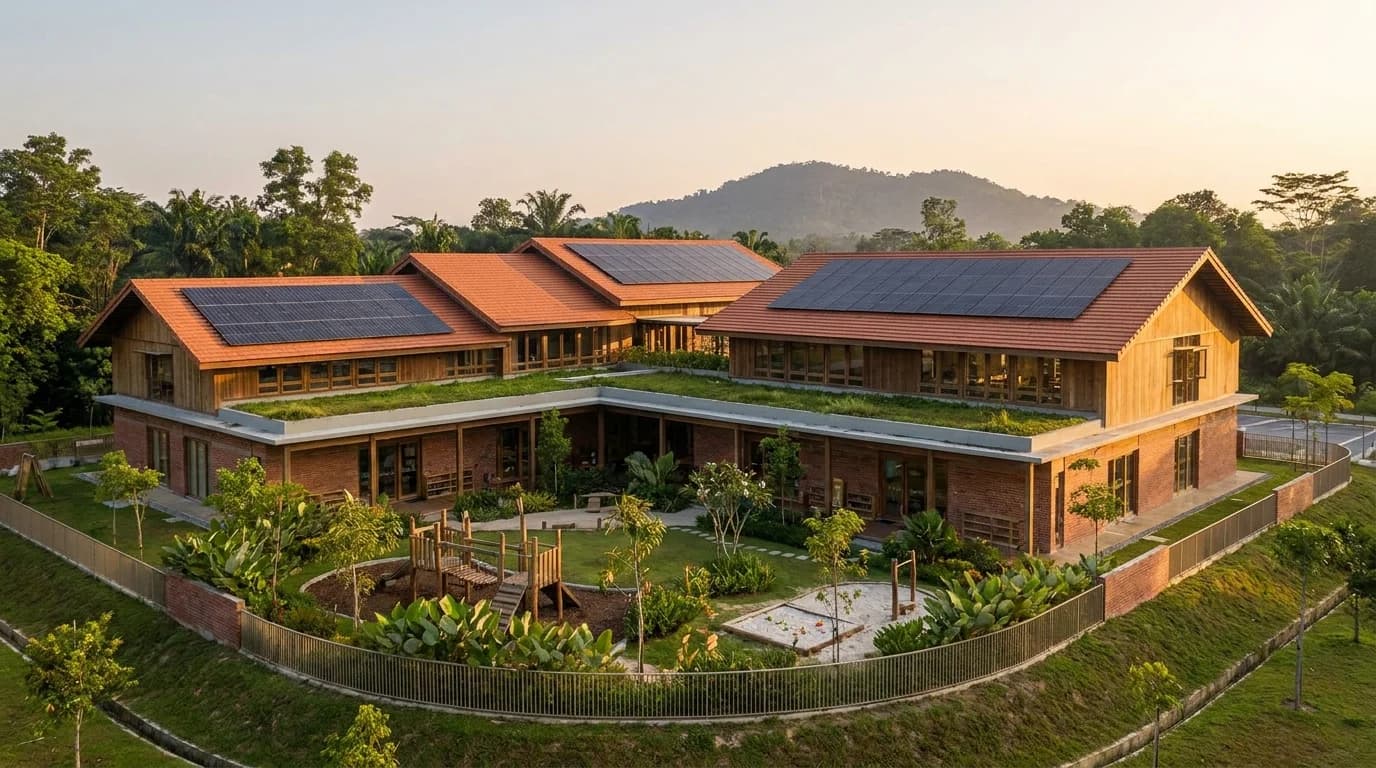
Illustrative Malaysian kindergarten with rooftop solar
AI-generated concept · not a completed Trexon installation

Typical 9.92 kWp System

For 60-100 children center

~RM 370

Estimated monthly saving

RM 23,999

Catalogue System Price

Payback PeriodAbout 5.4 Years

Why Solar for Kindergartens?

Create a better learning environment while reducing costs

Lower Running Costs

Reduce operating costs to invest more in education and facilities

Educational Tool

Teach children about renewable energy and environmental responsibility

Safe & Reliable

Ensure safe, consistent power for classrooms and play areas

Green Certification

Enhance your kindergarten's reputation as an eco-friendly institution

Solutions for Every Center Size

Tailored solar systems based on your enrollment and facilities

Small Centers

20-30 children, basic facilities

System Size5.58 kWp
Monthly SavingsRM 140/month

Medium Centers

30-60 children with play areas

System Size6.82-8.06 kWp
Monthly SavingsRM 210-280/month

Large Centers

60-100 children, larger premises
System Size8.68-10.54 kWp
Monthly SavingsRM 320-400/month
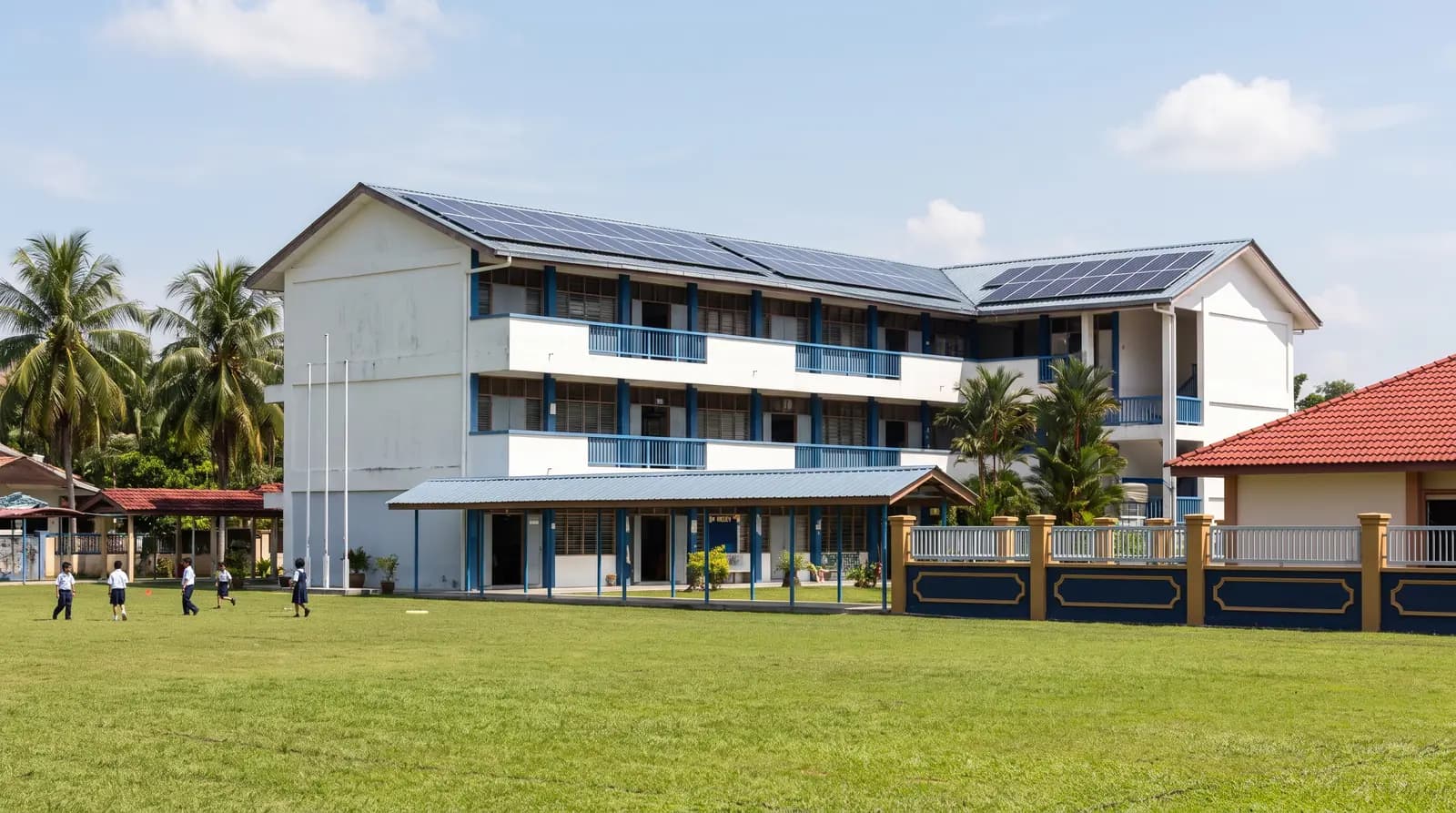
A Malaysian school block with rooftop solar panels and a playing field in front

Educational & Operational Benefits

More than just energy savings for your kindergarten

Comfortable Learning Environment

Keep classrooms cool with air conditioning partly supplied by daytime solar

Parent Appeal

Attract environmentally-conscious parents seeking sustainable education

Living Classroom

Solar panels become an interactive educational resource for children

Long-Term Savings

Reinvest energy savings into better facilities, toys, and teaching materials

Teaching Opportunity

Turn Solar into a Learning Experience

Your solar installation becomes an interactive educational tool

Teach renewable energy concepts through real examples

Monitor solar production on classroom displays

Incorporate sustainability into daily curriculum

Build environmental awareness from an early age

Create engaging science lessons about the sun and energy

Develop eco-conscious future leaders

Safe & Simple Installation

Child safety is a priority throughout the process

1

Facility Assessment

We evaluate your roof, energy needs, and classroom requirements

2

Safety-First Design

Child-safe installation plan with educational display options

3

Quick Installation

Installed during holidays to avoid disrupting classes

4

Educational Handover

Training on monitoring system and teaching resources provided

Commercial Solar

Get a Custom Solar Proposal for Your Kindergarten

Tell us about your business and we'll design a solar system that matches your energy needs and budget.

  • Sizing from your 12 months of TNB bills and shift pattern
  • Roof, switchboard and single-line diagram reviewed by our engineers
  • Available incentives (GITA for solar, subject to MGTC verification) and Solar ATAP eligibility checked for your premises
  • SEDA-registered PV Service Provider (RPVSP-2026/373) · SSM 201301044881 (1074704-D)

Prefer to talk first? Message our commercial team on WhatsApp.

WhatsApp Us

Send your project brief

Tell us about the site and we will prepare an education solar proposal priced per project from your bills.

Mobile or office line

You can also upload these in your dashboard after submitting, or send them on WhatsApp.

By submitting you agree to be contacted about this project.

Built for kindergartens

Invest in a Greener Future for Education

Get a free quote tailored to your kindergarten's needs

Protected Connection
Gateway Payment
Terms Confirmed Before Payment
Server-Verified PricingOrder-Specific Payment RecordDashboard Order Tracking

Choosing the Right System Size for Your Kindergarten

Kindergartens in Malaysia typically consume 800–2,500 kWh per month depending on enrollment, air-conditioning hours, and kitchen facilities. Here is a sizing guide based on modelling estimates for non-domestic sites (catalogue prices and headline savings, Solis inverter, Jinko 620 W panels; above 19.84 kWp is about RM2,400/kWp before SST, quoted per site).

Center ProfileTypical Monthly BillRecommended SystemEst. Monthly SavingsPayback Period
Small tadika (20–30 children)RM 600–9005.58 kWpRM 140About 9.5 years
Mid-size center (30–60 children)RM 900–1,5006.82–8.06 kWpRM 210–280About 6.4–6.9 years
Large center (60–100 children)RM 1,500–2,5008.68–10.54 kWpRM 320–400About 5.1–5.7 years
Multi-building campus (100+ children)RM 2,500–4,00015.50–19.84 kWpRM 750–960About 3.1–3.5 years

Use our solar savings calculator for a precise estimate based on your actual TNB bill. A Trexon assessor will verify roof space and shadow-free area before confirming the system size.

Typical Kindergarten Electricity Bill — What Drives the Cost?

A typical Malaysian kindergarten with 50 children, operating 8 hours per day (7 am–3 pm, Monday to Friday), accumulates an electricity bill of around RM 1,200–1,800 per month. Air conditioning is by far the largest load — accounting for 55–65% of consumption. Here is where your electricity budget goes:

Air conditioning (classrooms + office)
2–4 units running 6–7 hours/day
55–65%
Lighting (fluorescent / LED)
Switching to LED saves up to 70%
12–18%
Kitchen equipment (fridge, microwave, water heater)
Runs throughout school day
10–15%
Computers / projectors / AV
Grows with digitalisation of curriculum
5–8%
Fans, water pumps, misc.
Background load that runs all day
5–10%

Solar panels generate electricity between 8 am and 4 pm — exactly aligned with kindergarten operating hours. This means solar directly offsets your highest-consumption period, maximising self-consumption and ROI without requiring battery storage.

Child Safety Considerations for Kindergarten Solar Installations

Safety is the primary concern for any installation in a childcare environment. Trexon follows a strict child-safe installation protocol for every kindergarten project, in line with the applicable installation guidelines.

Rooftop Access Prevention
All roof access points (hatches, ladders) are padlocked and labelled. Panels are installed on sections of roof inaccessible from the ground without a ladder — and playground layouts are reviewed to ensure children cannot reach roofline edges.
Inverter Placement
String inverters are mounted at height (minimum 2.1 m) in a locked electrical room or behind anti-tamper enclosures. Trexon recommends this room be kept locked at all times during school hours.
DC Cable Management
All DC cabling (which remains live even when the inverter is off, during daylight) is routed through conduit, not exposed on walls. MC4 connectors are secured and covered.
Emergency Shutdown
A clearly labelled rapid shutdown switch is installed near the main distribution board, enabling teachers or BOMBA to isolate the system within seconds.
Installation Timing
We schedule all kindergarten installations during school holidays (mid-year break or year-end) so children are never on campus during roof works. Final commissioning and testing is completed before the school term resumes.
Educational Display Panel
A tamper-proof, display-only monitoring screen can be installed in the reception or a classroom — showing real-time solar generation. Children interact only with this screen, never with live equipment.

Solar ATAP Benefits for Kindergartens and Preschools

From January 2026, Malaysia's solar export scheme transitioned to Solar ATAP (GP/ST/No. 60/2025), replacing NEM 3.0. Kindergartens fall under the non-domestic category and qualify for Solar ATAP under the commercial tariff structure. Here is what this means for your centre:

Export credits at SMP rate
Any solar electricity your kindergarten generates but does not use during the day is exported to TNB at the Average System Marginal Price (SMP). This credit offsets your nighttime or weekend consumption — reducing your bill further.
No monthly credit carry-forward
Under Solar ATAP, unused credits reset monthly. For kindergartens (closed weekends and public holidays), this means a slightly smaller-sized system is optimal — typically sized to cover 70–80% of school-day consumption rather than 100% to avoid forfeited exports.
SEDA registration handled by Trexon
Trexon is a SEDA-registered Registered PV Service Provider (RPVSP). We handle the full ATAP application — SEDA registration, TNB metering change, CCC assessment — as part of the installation package.
GITA for private kindergartens
Private kindergartens operating as companies (Sdn Bhd) can claim the Green Investment Tax Allowance (GITA) — a 60% tax allowance on qualifying solar capex, set off against up to 70% of statutory income. This reduces your corporate tax bill without covering the full solar cost.

Frequently Asked Questions — Kindergarten Solar

Can my kindergarten still go solar if we rent the premises?
Yes, if enough of your lease remains and you have the landlord's written consent. Trexon provides a standard landlord consent letter template. The solar system remains the kindergarten owner's asset and can be transferred or removed at lease end (removal is quoted at the time).
Will the solar installation disrupt classes?
No. Trexon schedules all rooftop work during school holidays. Electrical work (DB connections, inverter installation) is completed in a single day and may require a 2–4 hour electricity interruption, which we coordinate on a non-school day or weekend.
Is there a minimum system size for Solar ATAP application?
No. For non-domestic (commercial) premises, SEDA and TNB accept Solar ATAP applications from 1 kWp and above. A 3 kWp system qualifies fully. The practical minimum for meaningful ROI is around 5 kWp given installation fixed costs.