Model your project savings and peak-demand reduction
Calculate ROISolar PPA Malaysia: Power Purchase Agreement
A Solar PPA requires a third-party asset owner that owns the system on your roof and sells you its output per kWh. Trexon does not offer PPAs — Trexon's own routes are outright ownership (GITA-eligible) or hire purchase through a partner. See also: commercial solar, industrial solar, government solar incentives, contact us.
What Is a Solar PPA in Malaysia?
A Power Purchase Agreement (PPA) — sometimes called a Solar Service Agreement or SPPA — is a financial model where your business never buys the solar system. Instead, a third-party asset owner funds and owns the system on your rooftop, and you purchase the electricity it generates.
Think of it as a private electricity supply arrangement: you have a solar power plant on your roof, but the provider owns it, insures it, and maintains it throughout the contract term. Your role is to consume the solar electricity and pay the per-kWh rate set in the contract.
A PPA suits businesses that do not want to own the asset. The trade-off: the offtaker cannot claim GITA, and the asset owner's return is built into the rate.
No Ownership Required
You never own the panels, inverters, or any component. The provider carries the asset on their books.
Owner Carries the Asset
Repairs and performance obligations are allocated by the contract, normally to the asset owner.
Contracted Rate
The per-kWh rate is set in the contract. Whether it beats your tariff depends on the offer.
Long-Term Price Stability
A fixed or escalating rate for the contract term, whatever TNB tariffs do.
How a Solar PPA Works
How a typical third-party-owned PPA runs, in five stages.
Agreement Signed
Your business signs a PPA with a third-party asset owner. The contract sets the per-kWh rate, the term and the end-of-term options.
System Designed & Installed
The asset owner (or its installer) designs, permits and installs the system on your roof. The asset owner funds and owns it.
Energy Generated
The rooftop system generates electricity, and a meter measures every unit of solar energy delivered to your building.
You Pay Per kWh
Each billing cycle you pay the asset owner for the solar electricity you used, at the contracted rate. TNB supplies the rest as normal.
Owner Operates the System
Monitoring, maintenance and repairs follow the PPA contract, normally handled by the asset owner for the full term.
Timelines depend on the asset owner's approval process, system size and Solar ATAP / TNB connection lead times.
PPA vs Other Solar Models
How a Power Purchase Agreement compares with outright ownership, hire purchase and rent-to-own.
| Criteria | Solar PPA | Buy Outright | Hire Purchase | Rent-to-Own |
|---|---|---|---|---|
| Upfront Cost | Set by the asset owner | Priced per project from your bills | Per the hire-purchase terms | Per the agreement |
| Who Owns the System | Third-party asset owner | Your business | Per the hire-purchase terms | Provider (until buyout) |
| Maintenance Responsibility | Per the PPA contract | Your business (O&M contract optional) | Per the hire-purchase terms | Per the agreement |
| Monthly Payment | Pay per kWh used | None (post-purchase) | Fixed hire-purchase repayment | Fixed monthly rental |
| GITA claim | No (offtaker does not own) | Yes (owner, if deadlines met) | Depends on hire-purchase structure | Depends on structure |
| Offered by Trexon | No | Yes | Yes, via a partner | Residential only |
Savings and payback are calculated per project from your bills. Trexon systems are priced per project.
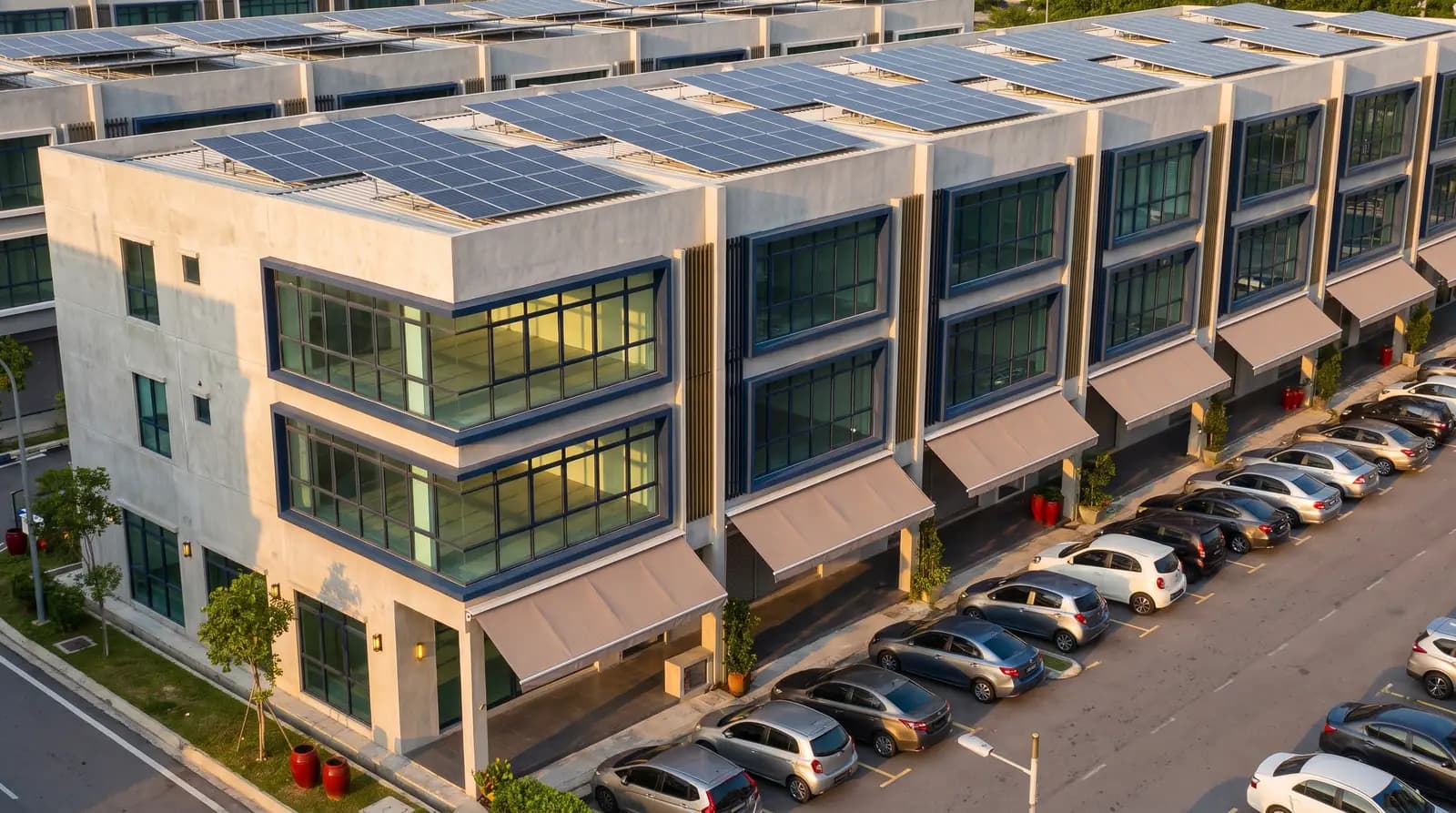
Solar PPA Rates in Malaysia
PPA rates are set by each third-party asset owner from your tariff, consumption profile, roof and contract term. Trexon does not offer a PPA, so it publishes no PPA rates; compare any offer against the cost of owning the system.
Fixed Rate Structure
One contracted rate for the whole term. Compare it with your current tariff and with ownership.
Escalator Structure
A lower starting rate that rises by a contracted percentage each year. Model it against your own tariff outlook.
Hybrid Structure
Fixed for part of the term, then renegotiated. Read the renegotiation terms carefully.
Who Is Solar PPA Best For?
Third-party ownership is discussed most by organisations with high daytime consumption, available roof space and a preference not to own the asset.
Factories & Manufacturing
High daytime electricity loads make factories ideal PPA candidates. Reduce OpEx without disrupting capital for machinery and production expansion.
Best fit: 300kWp – 2MWpWarehouses & Logistics
Large flat roof areas and consistent lighting and cooling loads make warehouses perfect for PPA solar. Landlords can offer tenants green energy credentials.
Best fit: 100kWp – 500kWpOffice Buildings
Reduce common area electricity costs and achieve ESG reporting targets. PPA helps offices demonstrate sustainability without board-level capex approval battles.
Best fit: 50kWp – 200kWpShopping Malls & Retail
Massive cooling and lighting bills make malls prime PPA candidates. Reduce utility costs while marketing your commitment to clean energy to shoppers.
Best fit: 500kWp – 3MWpSchools & Universities
Educational institutions often lack capital budgets for solar, which is why third-party ownership is discussed. Public institutions procure through their own tender processes.
Best fit: 50kWp – 300kWpHotels & Hospitality
Round-the-clock energy consumption and guest-facing sustainability credentials make hotels strong PPA candidates. High daytime cooling loads suit on-site solar.
Best fit: 100kWp – 500kWpMinimum Requirements for PPA in Malaysia
GITA Tax Benefits Under a Solar PPA
GITA (Green Investment Tax Allowance, Asset) lets the company that owns a qualifying solar system claim an allowance of 60% of qualifying capital expenditure, set off against up to 70% of statutory income. Applications go to MGTC. The capex must be incurred, the system commissioned and the application submitted by 31 December 2026.
In a PPA the third-party asset owner, not your business, owns the system, so the offtaker cannot claim GITA. If GITA matters to you:
- Own the system outright — the owner is the party that can claim
- Meet all three conditions by 31 Dec 2026: capex incurred, commissioned, MGTC application submitted
- It is an allowance against statutory income, not a rebate
- Confirm qualifying expenditure with MGTC and your tax adviser
Important: Tax treatment of PPA arrangements depends on the specific contract structure and your business's tax position. Always consult a qualified Malaysian tax advisor before making decisions based on GITA eligibility.
GITA Key Facts for 2026
Other Tax Considerations
PPA payments are generally treated as operating expenses rather than capital expenditure. How they are treated for your business depends on the contract and your tax position — confirm with your tax adviser.
Frequently Asked Questions: Solar PPA Malaysia
Common questions from Malaysian businesses evaluating a Power Purchase Agreement.
What is a Solar PPA (Power Purchase Agreement) in Malaysia?
A Solar PPA is a contract in which a third-party asset owner owns and operates a solar system on your rooftop or property, and your business buys the electricity it generates at a per-kWh rate set in the contract, usually over a long term. A PPA therefore requires a third-party asset owner willing to fund and hold the system. Trexon does not offer PPAs. Trexon's own routes are outright ownership (GITA-eligible) or hire purchase through a partner.
How much does a Solar PPA cost upfront in Malaysia?
The upfront terms are set by the third-party asset owner in its contract, so they vary by provider and project. In a typical PPA the asset owner funds the system and recovers its investment through the per-kWh rate. Trexon does not offer PPAs. Trexon's own routes are outright ownership (GITA-eligible) or hire purchase through a partner. Every Trexon system is priced per project from your bills.
Who owns the solar system in a PPA arrangement?
The third-party asset owner owns the system throughout the contract term. This is what makes a PPA different from buying or leasing solar: the asset sits with the owner, not your business. Trexon is not a PPA asset owner.
Who handles maintenance and repairs under a Solar PPA?
Maintenance, repairs, monitoring and insurance are allocated by the PPA contract. Usually the asset owner is responsible, because it owns the equipment, but read the contract for performance and repair terms.
What happens when the PPA contract ends?
End-of-term options are set by the contract. Common options are renewing, buying the system at a price defined in the contract, or having the asset owner remove it. Check these terms before signing.
Can my business still claim GITA tax incentives under a Solar PPA?
No. GITA (Asset) is claimed by the company that owns the qualifying asset, and in a PPA that is the third-party asset owner, not the offtaker. If GITA matters to you, outright ownership is the route: the owner can claim an allowance of 60% of qualifying capex, set off against up to 70% of statutory income, provided the capex is incurred, the system commissioned and the MGTC application submitted by 31 December 2026. Consult a tax professional for your situation.
What types of businesses qualify for Solar PPA in Malaysia?
Solar PPA works best for businesses with high, consistent daytime electricity consumption. Ideal candidates include factories and manufacturing plants, large warehouses and logistics hubs, shopping malls and retail complexes, hospitals and medical facilities, universities and schools, and office buildings above 5,000 sq ft. Minimum size and credit requirements are set by each asset owner.
How does the PPA rate compare to TNB tariff in Malaysia?
The PPA rate is whatever the asset owner offers in its contract: fixed for the term or with an annual escalator. Compare it with your own TNB tariff and with the cost of owning the system. Trexon publishes no PPA rates because it does not offer a PPA.
Compare Your Options
Trexon does not offer a PPA, but we can price an owned system (GITA-eligible) or hire purchase from your bills, so you can compare it with any PPA offer you hold.
No commitment required. Every system is priced per project from your bills.
Compare Ownership and Hire Purchase
Tell us about your facility and we'll price an owned system or hire purchase from your bills.
- Sizing from your 12 months of TNB bills and shift pattern
- Roof, switchboard and single-line diagram reviewed by our engineers
- Available incentives (GITA for solar, subject to MGTC verification) and Solar ATAP eligibility checked for your premises
- SEDA-registered PV Service Provider (RPVSP-2026/373) · SSM 201301044881 (1074704-D)
Prefer to talk first? Message our commercial team on WhatsApp.
WhatsApp UsRelated Articles
Solar Financing: Loans vs Cash vs PPA
A complete side-by-side comparison of every solar financing method in Malaysia
GITA Tax Incentive for Commercial Solar
How to claim Green Investment Tax Allowance on your commercial solar installation
Industrial Solar Malaysia: Factory OpEx Savings
How Malaysian factories use rooftop solar to reduce electricity costs