Model your project savings and peak-demand reduction
Calculate ROIFurniture & Wood Products Solar Malaysia 2026
EU furniture buyers increasingly ask suppliers for verified carbon data — Muar exporters may be asked by buyers for evidence of their energy and carbon footprint.
RM 80K – RM 200K
Typical monthly TNB bill
120–200 kWp
Typical system size
60%
GITA tax allowance eligibility (subject to MGTC verification)
Why Furniture & Wood Products Needs Solar Now
EU Buyer Carbon Data
The EU Carbon Border Adjustment Mechanism (CBAM) covers iron and steel, aluminium, cement, fertilisers, hydrogen and electricity — not gloves, electronics, textiles or furniture. EU buyers across sectors are, however, increasingly asking suppliers for verifiable Scope 2 emissions data, and metered solar output gives you measurable, auditable figures for it.
TNB Tariffs Are Structured, Not Flat
Non-Domestic Low Voltage (formerly Tariff D) customers pay a combined RM 0.5068/kWh (energy, capacity and network charges) plus the 1.6% KWTBB levy — TNB Commercial & Industrial Pricing & Tariffs, schedule stamped 2025-07-01. Medium- and high-voltage accounts are on different rates (for example MV General at RM0.2983/kWh energy charge) and add a maximum-demand charge read from your bill, so the RM 0.5068/kWh figure is a low-voltage assumption only. Solar generation offsets the energy component directly, for as long as the system runs.
60% GITA Tax Allowance — Window Closes 31 December 2026
Qualifying solar capital expenditure incurred before 31 December 2026 may claim an investment tax allowance equal to 60% of qualifying capex, offset against up to 70% of statutory income in the year of assessment. Indicative only. Subject to MGTC verification, applicable tax law and confirmation by the customer’s licensed tax adviser. The system must be commissioned and the GITA Asset application submitted to MGTC by 31 December 2026.
Get a GITA + Roof Capacity Screening
Share your bill, roof size and timeline. An engineer reviews your factory case.
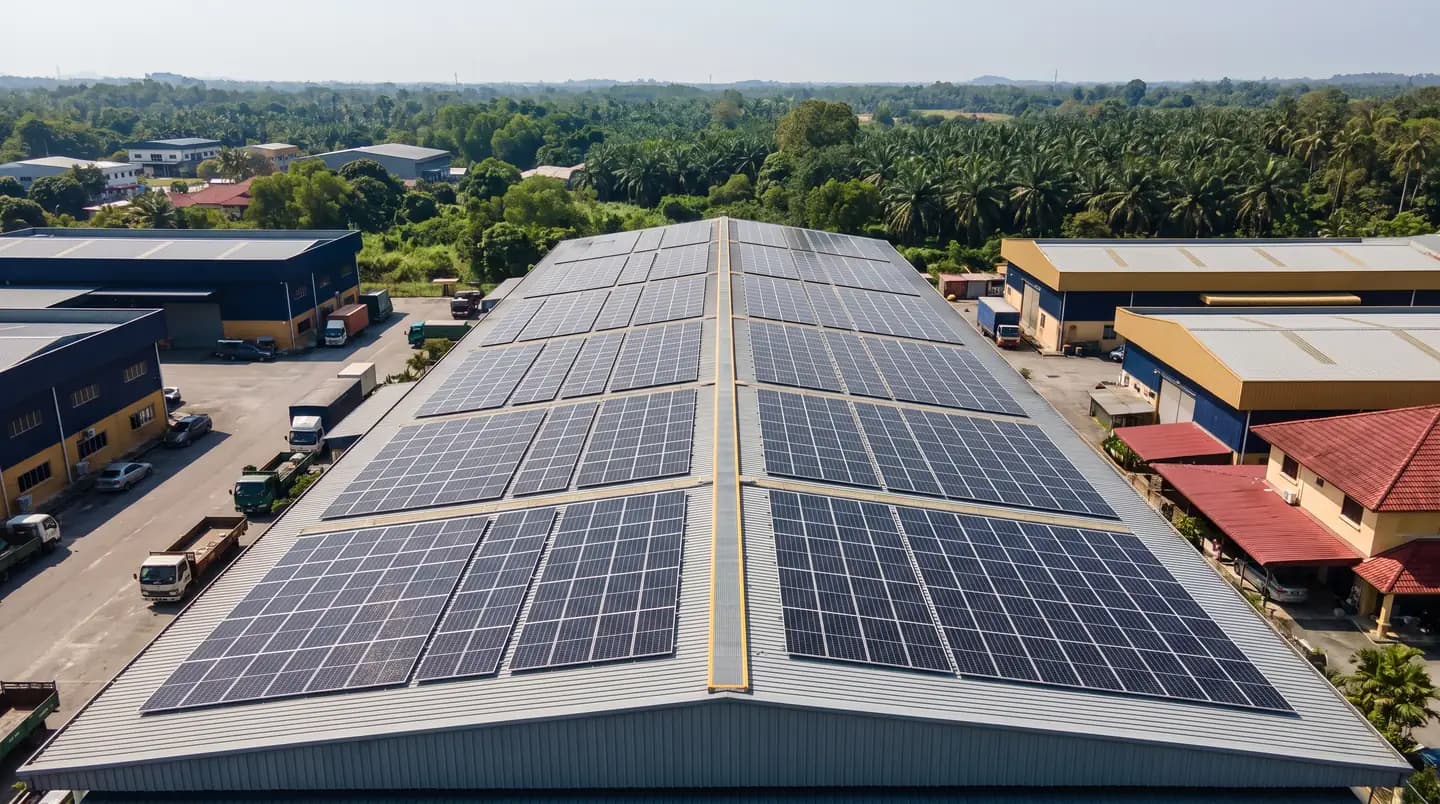
Modelled example for a furniture & wood products facility
Not a customer case study. Every figure below is arithmetic on Trexon's yield basis (3.5 peak sun hours, 105 kWh per kWp per month) and this vertical's own stated typical system-size band, applied at the Non-Domestic Low Voltage (formerly Tariff D) energy rate. Your facility's actual tariff class, load profile and savings depend on a site assessment of your TNB bill.
| Modelled system size | 160 kWp — mid-point of this vertical's typical band |
| Load profile assumption | single daytime shift, 98% assumed self-consumption (best case) |
| Modelled monthly generation | 16,800 kWh |
| Modelled self-consumed energy | 16,464 kWh/month |
| Modelled monthly bill offset | RM 8K at the Non-Domestic Low Voltage rate (RM0.5068/kWh) |
| Modelled annual bill offset | RM 100K |
A system this size may also qualify for the Green Investment Tax Allowance (GITA): an investment tax allowance equal to 60% of qualifying solar capital expenditure, offset against up to 70% of statutory income in the year of assessment, for expenditure incurred before 31 December 2026. Read the full GITA tax incentive guide.
Indicative only. Subject to MGTC verification, applicable tax law and confirmation by the customer’s licensed tax adviser. The system must be commissioned and the GITA Asset application submitted to MGTC by 31 December 2026. Tariff schedule stamped 2025-07-01.